How To Prevent Back Pain After Running Downhill Effectively
If you’ve ever tackled a steep downhill run, you probably expected sore calves or aching quads the next day. But when the ache lands squarely in your lower back instead? That’s a whole different level of annoying. I remember bombing down a hill during a trail race a few years ago—felt like a champ at the time. But the next morning? My lower back was so tight, I had to roll out of bed sideways like a 90-year-old. Sound familiar?
Why Back Pain Strikes After Running Downhill

There’s something about running downhill that feels deceptively easy—gravity’s on your side, after all. But your back? It’s doing way more than you think. When you’re going downhill, your body switches from propelling forward to resisting acceleration. That shift places significant stress on your spinal stabilizers, especially the lumbar region.
Muscular Overload & Eccentric Stress
Your muscles, particularly the erector spinae, go into overdrive to keep you upright and balanced. These muscles contract eccentrically—meaning they lengthen under tension. That’s like slowly lowering a weight instead of dropping it. Feels easier in the moment but leads to delayed onset muscle soreness (DOMS) and fatigue.
- Lower back stabilizers absorb repeated shocks
- Hips and glutes often disengage when fatigued
- Downhill stride length can increase spinal torque
Posture Goes Out the Window
Let’s be real—most of us lean back while running downhill. It’s a natural instinct to avoid falling forward. But that backward lean causes your pelvis to tilt and your lumbar spine to compress. This posture not only places strain on the discs but also contributes to herniated disc risk if repeated often without support.
Footstrike & Ground Reaction Forces
When your foot hits the ground going downhill, it does so with greater impact than flat or uphill runs. That impact travels up the kinetic chain—right to your back. Heel striking, especially, sends a jolt that your lower spine often ends up absorbing if your core or glutes are slacking.
How to Prevent Back Pain from Downhill Running

Fix Your Form
This sounds boring, but trust me—form makes all the difference. I didn’t realize how much I was leaning back until I saw a race photo. Mid-stride, I looked like I was trying to sit on an invisible chair. Here’s what helps:
- Lean slightly forward from the ankles—not the waist
- Keep your stride short and fast, not long and stompy
- Engage your core and glutes every few strides as a check-in
This upright, slightly forward-leaning posture helps your spine stay neutral and supported, distributing impact more evenly through your lower body.
Strengthen Supporting Muscles
Runners often neglect their posterior chain. Strengthening your glutes, hamstrings, and back extensors is non-negotiable. I personally started seeing a difference once I added deadlifts and Bulgarian split squats into my weekly routine.
Don’t skip:
- Planks and side planks (for core stability)
- Hip thrusts (to fire up those glutes)
- Bird-dogs and superman holds
Warm-Up Like You Mean It
I used to treat warm-ups as optional. Then I realized I was essentially asking cold muscles to perform high-level neuromuscular coordination—especially downhill. Big mistake. A few minutes of dynamic movements like leg swings, lunges, and gentle back extensions can prepare your spine and hips for the jolt they’re about to take.
When to Worry: Signs Your Back Pain Isn’t Normal

Most post-downhill soreness fades within a few days, but certain symptoms are red flags. If you’re dealing with numbness, shooting leg pain, or symptoms that persist more than a week, it’s worth exploring further. This might point to sciatica, disc issues, or muscular imbalances that need targeted correction. Read more on how to differentiate sciatica from general back pain.
- Pain worsens at night or early morning stiffness persists
- You feel a radiating sensation down the leg or into the glutes
- Back pain flares up after sitting for long periods
In these cases, professional assessment and possibly imaging—like an MRI—may be necessary.
Best Recovery Tips After Downhill Runs
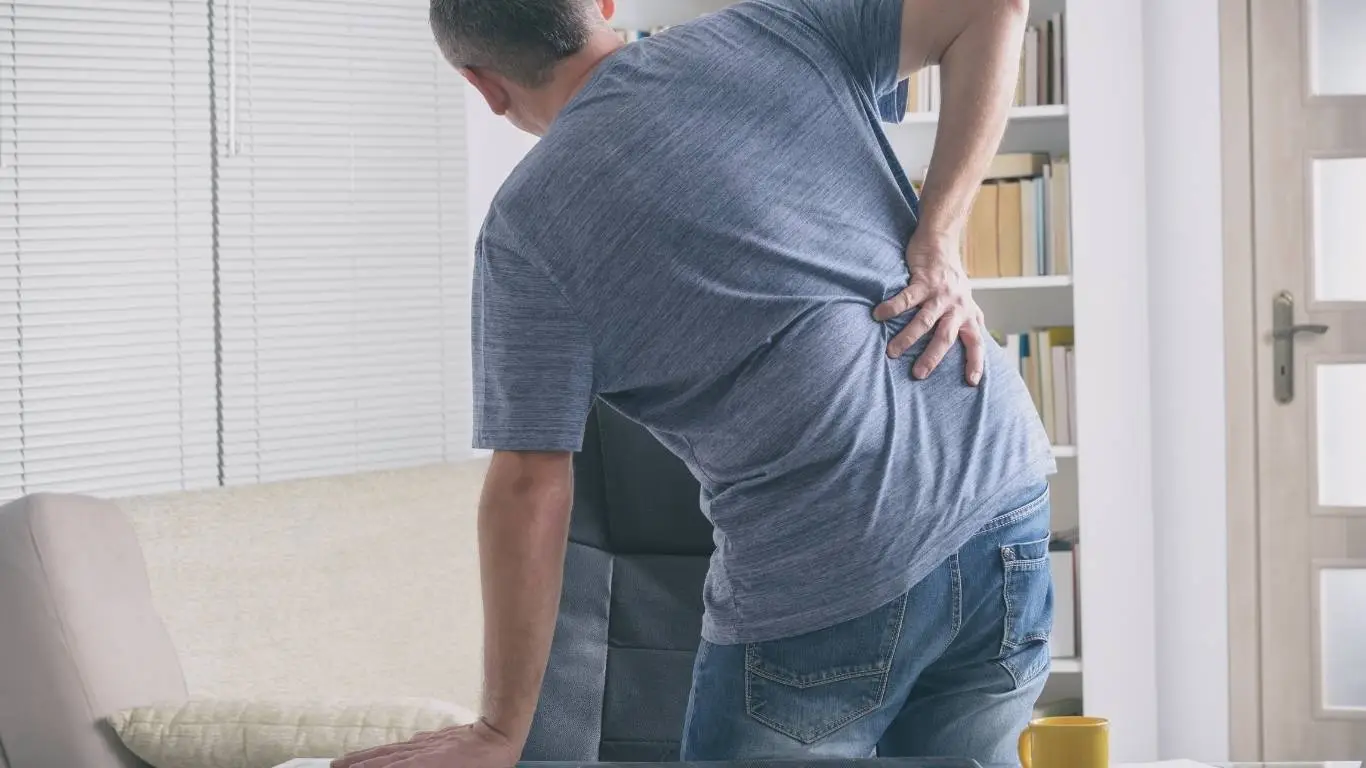
One thing I swear by now is active recovery. Plopping down on the couch post-run used to be my move, but that just made everything seize up. Instead:
- Light yoga or mobility flows 6–12 hours post-run
- Contrast showers (alternating hot/cold) for circulation
- Foam rolling glutes, quads, and thoracic spine (not lower spine!)
Natural anti-inflammatory aids can also help. I’m personally a fan of turmeric supplements and magnesium-rich snacks post-run. And no surprise here—poor posture during recovery, like slouching at your desk or slumping on the couch, can undo all your effort.
More recovery tools are shared in our full conservative treatments guide if you’re looking to go deeper.
Explore Related Back Pain Topics

- Want to know why posture wrecks your spine even when you’re off the trails?
- Curious if yoga can ease running-induced pain the right way?
- Or wondering what else you can do? Read our complete guide to back pain or check the exercise and rehab section.
It’s not just about treating pain—it’s about preventing it from sidelining your progress entirely.
Best Exercises to Protect Your Back on Downhill Runs

If there’s one thing that helped me stop dreading downhill runs, it was smart strength training. We’re not talking about bodybuilding here—this is about resilience, injury prevention, and making sure your back doesn’t bear the brunt of poor biomechanics. Whether you’re a casual runner or prepping for your next trail ultra, adding these moves to your weekly rotation can make all the difference.
1. Core Stability Work
Think beyond crunches. The real magic comes from anti-rotation and anti-extension movements. These train your spine to resist bad movement patterns during dynamic impact like—you guessed it—running downhill.
- Pallof presses
- Dead bugs
- Bird-dog variations
- Side planks with leg lifts
2. Posterior Chain Activation
If your glutes are sleeping on the job, guess who has to pick up the slack? Your lower back. That’s a shortcut to pain. Here’s what helped me “wake up” the right muscles:
- Hip bridges (with banded resistance)
- Romanian deadlifts with light dumbbells
- Single-leg glute bridges
- Step-ups focusing on glute drive
Pair these with hip mobility drills and your stride will naturally improve—even on technical descents.
3. Eccentric Strength Drills
Since running downhill puts muscles under eccentric stress, training them to handle it better makes complete sense. Focus on slow lowering phases of your lifts. Try:
- Tempo squats (3 seconds down, 1 second up)
- Negative lunges
- Controlled step-downs from a low box
Smart Gear Can Help (A Lot More Than You Think)

This isn’t an excuse to go on a gear shopping spree, but a few well-chosen upgrades made a surprising difference in my recovery curve after downhill sessions. Some items are worth the investment—especially if your mileage is increasing or you’re logging serious elevation change.
Running Shoes With Proper Cushion & Support
One of the easiest fixes? Swap out your worn-out shoes. If your soles are compressed or unevenly worn, they change your gait mechanics and impact absorption. Choose shoes designed for trail stability and downhill cushioning. Your spine will thank you.
Supportive Insoles
If you’ve got flat feet or high arches, your back might be paying the price. A good pair of insoles can correct foot alignment and reduce torque up the kinetic chain. Read more on how flat feet impact back health.
Back Braces or Compression Belts?
I’m not a huge fan of depending on these, but for those dealing with recurring discomfort, a lightweight compression belt can provide proprioceptive feedback and gentle support. Just don’t use it as a crutch—instead, think of it as a temporary aid during recovery.
Stretching Routines to Release Post-Run Tension

I used to skip stretching. I thought, “Hey, I’m not stiff right now, so I’ll be fine.” Spoiler: I wasn’t. Tight hamstrings, hip flexors, and QLs (quadratus lumborum) were making every run harder on my lower back. Here’s what I added into my evening routine that made a huge difference:
- 90/90 hip switches (for rotational hip mobility)
- Child’s pose with side bends (targets QLs)
- Kneeling hip flexor stretch
- Hamstring flossing with a towel or band
Mix in some yoga poses for back tension and you’ve got a potent antidote to DOMS and tightness post-downhill days.
Fueling & Hydration Mistakes That Affect Your Spine
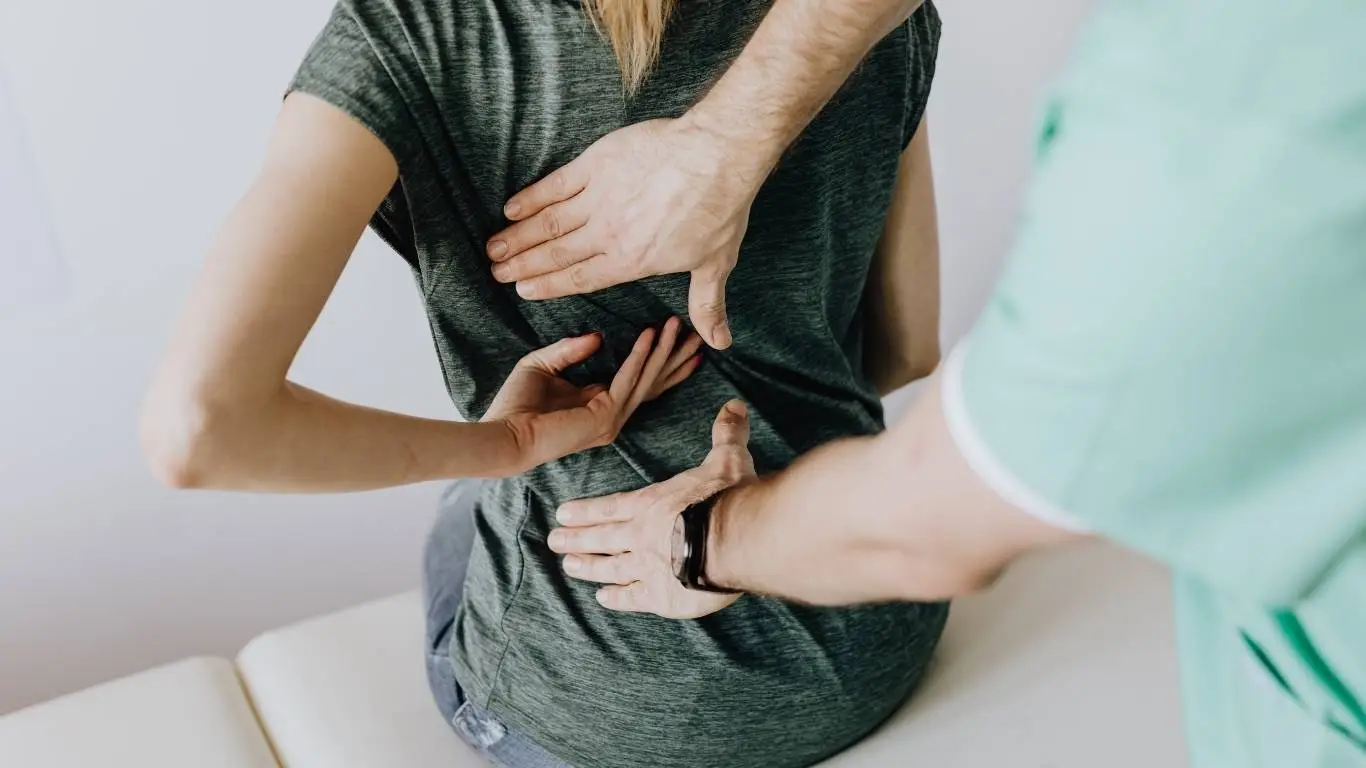
This one surprised me. I always associated fueling with energy, not spinal health. But dehydration and poor nutrient timing actually increase inflammation and muscular cramping. After a couple of long runs where I completely tanked and then suffered back tightness the next day, I started tracking my intake a little more closely.
Hydration Matters
Downhill running = more eccentric damage = greater inflammatory response. And hydration is key in regulating inflammation and muscle repair. Add electrolytes to your post-run drink, especially on hot or high-elevation days.
Anti-Inflammatory Nutrition
I started rotating in more omega-3s and turmeric. Noticed less swelling, less soreness. A few helpful guides:
Mind-Body Links: Stress, Pain, and Recovery

Here’s the thing nobody told me in the early days: stress makes pain worse. Period. Mental tension, overtraining, life pressure—it all feeds into back pain patterns. Once I incorporated mindfulness (even just 5 minutes a day), things improved. No, it wasn’t magic, but the combination of focused breathing and non-reactive awareness helped down-regulate pain signals.
Curious? Start with:
Turns out, the brain and the spine aren’t so separate after all.
Back Pain After Downhill Running Doesn’t Have to Be Your Normal

Look, back pain after a downhill session can feel inevitable—but it’s not. With the right mix of awareness, form tweaks, strength, recovery, and mindset, you can beat it. I’ve gone from dreading steep descents to actually enjoying them. And if I can make that shift with a few smart adjustments, so can you.
Need more tailored recovery ideas? Dive into our natural lifestyle back pain solutions or check the full scope in our main back pain resource hub.

Camellia Wulansari is a dedicated Medical Assistant at a local clinic and a passionate health writer at Healthusias.com. With years of hands-on experience in patient care and a deep interest in preventive medicine, she bridges the gap between clinical knowledge and accessible health information. Camellia specializes in writing about digestive health, chronic conditions like GERD and hypertension, respiratory issues, and autoimmune diseases, aiming to empower readers with practical, easy-to-understand insights. When she’s not assisting patients or writing, you’ll find her enjoying quiet mornings with coffee and a medical journal in hand—or jamming to her favorite metal band, Lamb of God.