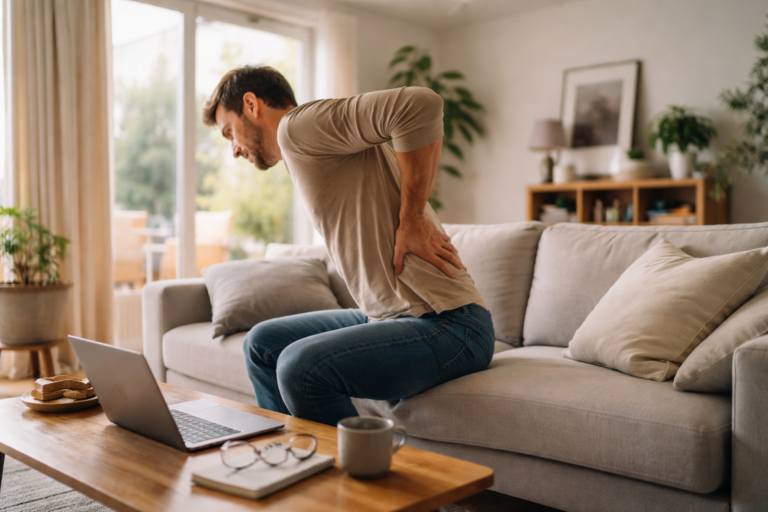
Subtle Stiffness That Comes and Goes
There are mornings when I swing my legs out of bed and something feels slightly off. Not pain exactly. Just a faint resistance, like my body is moving through air that’s a little thicker than usual.
It doesn’t last. By the time I’ve made coffee or walked down the hallway, it’s already fading. And yet I notice it. That subtle stiffness that comes and goes, without much explanation.
It’s the kind of everyday experience that’s easy to dismiss. If it stayed all day, it would demand attention. But because it drifts in and out, it becomes part of the background. Something many people quietly recognize in their own way.
This isn’t about anything dramatic. It’s more about those small shifts in physical comfort that don’t announce themselves loudly. They just show up, linger, and move along.
How It Tends To Feel
For me, it’s often a mild tightness across the shoulders or behind the knees. Other times it’s in my hands, especially first thing in the morning. There’s a brief sense that movement needs a second to “warm up,” even if I haven’t done anything unusual the day before.
It doesn’t feel sharp. It doesn’t feel alarming. It feels… temporary.
Sometimes it’s almost symmetrical, both sides of the body carrying the same faint heaviness. Other days it’s one hip or one ankle, as if that part of me decided to hold onto the night a little longer.
By mid-morning, it’s often forgotten. I might only remember it later when I sit for a long stretch and stand up again. That same slight resistance returns, like a quiet echo.
Why It Feels So Familiar
Part of why subtle stiffness that comes and goes feels so familiar is because it doesn’t interrupt life. You can still get dressed, drive, answer emails, fold laundry. Everything works. It just feels a little less fluid for a while.
In conversations with friends, it sometimes slips into casual talk. Someone mentions feeling “a bit tight” lately. Another person nods. No one makes a big deal of it. It’s framed as a common pattern, especially with busy routines and long hours sitting or standing.
There’s also something about modern daily life that seems to create these small pauses in physical ease. Long stretches at a desk. Evenings on the couch. Errands that involve more driving than walking. The body adjusts quietly, and sometimes that adjustment shows up as stiffness.
It doesn’t feel like a single cause. It feels more like a rhythm.
Moments When It Shows Up
After Stillness
One of the most noticeable times is after being still. Early mornings are the obvious example, but not the only one. Sitting through a movie, a long meeting, or even a car ride can create that same effect.
Standing up after an hour or two can bring a brief wave of tightness. A stretch, a few steps, and it fades. It’s almost predictable in that setting, though it still feels slightly surprising each time.
After Busy Days
Oddly enough, it also appears after days that feel physically full. Not intense, just active in an ordinary way. Cleaning the house. Walking more than usual. Rearranging a room. Even carrying groceries up the stairs.
The next day, there might be a mild stiffness in the lower back or calves. Nothing dramatic. Just a reminder that the body was engaged in ways it isn’t every day.
And then, just as quietly, it eases.
During Seasonal Shifts
I’ve noticed that changes in weather seem to bring it out more often. When the air turns cooler, joints and muscles sometimes feel less flexible at first. On damp days, there can be a sense of heaviness that’s hard to describe.
It’s subtle enough that I’m never fully certain. Maybe it’s coincidence. Maybe it’s just the shift in routine that comes with different seasons—less time outdoors, different sleep patterns, heavier clothing.
Still, the timing feels consistent enough to notice.
The Role Of Attention
What’s interesting is how awareness changes the experience. On busy days, I might not notice the stiffness at all. There’s too much else happening. My focus is elsewhere.
On quieter days, especially weekends, I’m more tuned in. A slight tightness in my neck becomes more apparent. The way my ankles feel when I go down the stairs seems more distinct.
It makes me wonder how much of subtle stiffness that comes and goes is about sensation itself, and how much is about noticing it.
When attention sharpens, small physical details come into view. Not in a dramatic way. Just in the way you suddenly hear the hum of a refrigerator once the house gets quiet.
Daily Routines And Small Patterns
There’s a pattern I’ve seen in my own life. Weeks with irregular sleep tend to feel different physically. Not worse, exactly. Just less smooth.
Late nights followed by early mornings create a kind of low-level tension. It’s as if the body hasn’t fully reset. The stiffness that appears in those weeks feels slightly more frequent, though still mild.
Work routines play a part too. Long periods at a computer seem to gather tightness in predictable places—shoulders rounding forward, hips staying in one position for hours.
But then a weekend of moving around more naturally, even without structured exercise, seems to shift the feeling again. It’s less about effort and more about variety.
None of it feels linear. It’s not a simple equation where one action leads directly to one sensation. It’s more like layers stacking quietly over time.
Aging, But Not In A Dramatic Way
There’s also the subtle awareness that bodies change gradually over the years. Not in a sudden, headline-making way. Just in the way recovery feels a little slower, or flexibility isn’t quite what it used to be without regular movement.
Subtle stiffness that comes and goes sometimes feels like part of that larger arc. Not a problem. More like a shift in baseline.
I’ve heard people in different age groups describe similar sensations, though the tone changes. Younger adults might brush it off completely. Middle-aged friends might mention it with a half-smile. Older adults sometimes treat it as a normal companion.
The common thread is that it’s rarely described as constant. It moves in and out of daily life.
Environmental Details
Temperature, furniture, even shoes seem to influence these small physical shifts. A firm chair feels different from a soft couch. Supportive shoes create a different end-of-day feeling compared to worn-out ones.
Working at a kitchen table for a few days instead of a proper desk subtly changes posture. That shift sometimes shows up later as a slight tightness across the upper back.
Even stress seems to have a physical texture. On tense days, shoulders rise almost without permission. The next morning, they may feel less relaxed than usual.
It’s hard to isolate one factor. Everything blends together.
The Way It Fades
One of the most reassuring aspects of this experience is how often it fades on its own. Movement helps, but not in a deliberate, strategic way. Just normal living—walking to the mailbox, tidying up, stretching arms overhead while reaching for a shelf.
Sometimes it disappears so quietly that I forget it was there.
That in-and-out quality is what makes it distinct. If it were constant, it would carry a different weight emotionally. Instead, it feels like a passing phase in the body’s daily rhythm.
There’s something oddly grounding about noticing it without overreacting. Just observing the ebb and flow of physical comfort.
Part Of A Larger Awareness
Paying attention to these small changes has made me more aware of how layered physical experience really is. Comfort isn’t a fixed state. It shifts with sleep, movement, mood, environment, and time.
Subtle stiffness that comes and goes fits into that broader landscape of body awareness and physical comfort. It’s one thread in a much bigger pattern of everyday sensations.
Not everything the body does needs a clear explanation. Some experiences are just fluctuations—like energy levels rising and falling throughout the day.
And maybe that’s why this particular kind of stiffness feels so ordinary. It doesn’t demand a story. It doesn’t insist on meaning.
It shows up, lingers briefly, and then eases, leaving behind the quiet reminder that the body is always adjusting, even when we aren’t paying close attention.

Robin Abbott is a wellness and lifestyle writer at Healthusias, focusing on everyday health awareness, habits, and life optimization through clear, non-medical explanations.