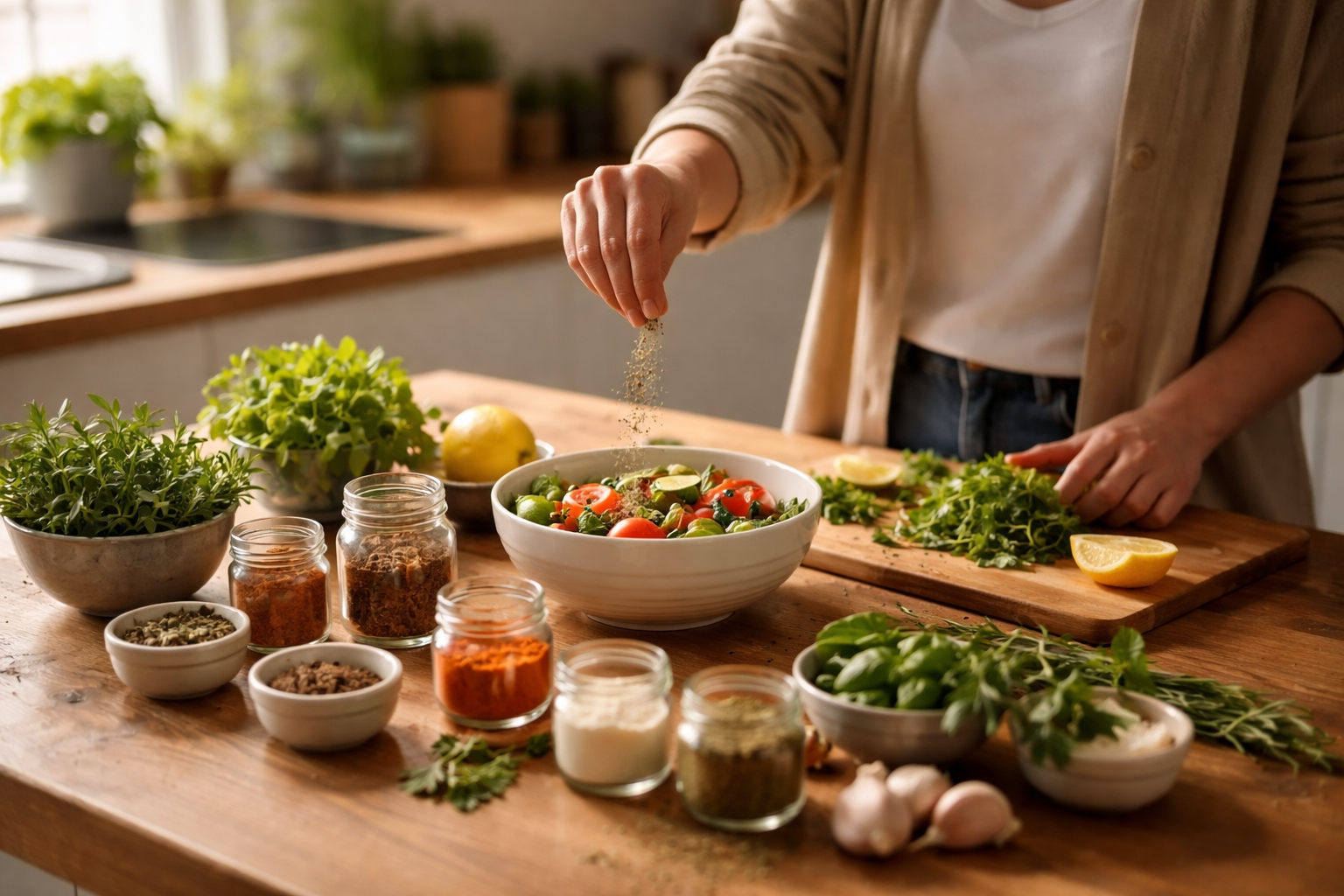
Herbs and Spices for Kidney Diet: Flavor Without Extra Sodium
Many people only start thinking about flavor differently after they’ve been told to “cut back on salt.” Suddenly, everyday meals can feel bland or repetitive. This is where herbs and spices for kidney diet habits become especially important—they offer a simple way to bring food back to life without relying on extra sodium.
Why Herbs and Spices Matter in a Kidney-Friendly Diet
When someone is managing kidney health, one of the most common dietary adjustments involves reducing sodium intake. Too much salt can make the body hold onto fluid and put extra strain on the kidneys. But food without flavor can quickly lead to frustration.
This is where herbs and spices step in. They provide depth, aroma, and variety without adding sodium. In many kitchens, this shift becomes less about restriction and more about rediscovering how food can taste naturally.
Fresh herbs like basil, parsley, and cilantro can brighten simple dishes. Dried spices like paprika, cumin, or turmeric can add warmth and complexity. Even something as simple as garlic or lemon zest can change how a meal feels.
If you’re just starting to explore low-sodium eating, it may help to understand the bigger picture in this complete kidney health overview, which explains how diet choices fit into daily life.
Struggling to Make Low-Sodium Meals Taste Good?
Simple ingredient swaps and flavor strategies can make a big difference without feeling restrictive or complicated.
Explore easy ways to bring flavor back into your meals
What Influences Flavor Choices in Kidney-Friendly Cooking
Adjusting to herbs and spices isn’t always immediate. Taste preferences, cooking habits, and even cultural food traditions all play a role in how easy—or difficult—this shift feels.
1. Habit and Routine
Many people are used to reaching for salt automatically. It’s part of cooking routines that have developed over years. Replacing that habit takes time, and at first, food may seem less satisfying.
2. Ingredient Availability
Not everyone has a wide variety of herbs and spices readily available. Some may rely on pre-made seasoning blends, which often contain hidden sodium.
3. Understanding Labels
Seasoning mixes, marinades, and sauces can quietly add a lot of salt. Learning how to spot these sources is part of building a more kidney-conscious approach. A helpful starting point is this practical guide to lowering sodium in everyday meals.
4. Flavor Expectations
It’s common for people to expect bold, salty flavors right away. But over time, taste buds often adjust. Many people find they begin to appreciate more subtle, natural flavors once salt is reduced.
Common Experiences When Switching to Herbs and Spices
Making this shift doesn’t happen overnight. In everyday routines, people often notice a few patterns as they start relying more on herbs and spices.
Food may taste “flat” at first. This is one of the most common reactions. Without salt, meals can seem dull. But this usually changes after a few weeks as taste sensitivity improves.
Experimentation becomes part of cooking. People start trying combinations they may not have used before—like rosemary with roasted vegetables or cumin in soups.
Fresh ingredients stand out more. When salt is reduced, the natural flavors of foods become more noticeable. This can lead to a greater appreciation for simple meals.
There’s a learning curve. Figuring out which spices work best together takes time. Some combinations may not work as expected, but that’s part of the process.
For those interested in how food choices connect with inflammation and overall well-being, this look at anti-inflammatory eating patterns can offer additional context.
Practical Ways to Use Herbs and Spices Daily
Building a habit of using herbs and spices doesn’t require complicated recipes. Small, consistent changes tend to work best.
Start with Simple Swaps
- Use garlic powder or fresh garlic instead of salt in savory dishes
- Add black pepper or paprika for a mild kick
- Try lemon juice or vinegar to brighten flavors
Build Flavor in Layers
Instead of adding everything at once, layer flavors throughout cooking. For example, sauté onions with herbs first, then add spices later for depth.
Use Fresh When Possible
Fresh herbs can provide a stronger aroma and brighter taste. Even adding them at the end of cooking can make a noticeable difference.
Experiment with Blends
Create your own seasoning mixes without salt. Combining herbs like thyme, oregano, and garlic powder can replace store-bought blends.
Pay Attention to Balance
Flavor isn’t just about spices. Combining acidity (like lemon), sweetness (like carrots), and texture can make meals more satisfying.
Many people find that once they get comfortable with these basics, cooking becomes more enjoyable again—not just a set of restrictions.
When People Start Looking for More Structured Help
At a certain point, some people feel stuck. They understand the idea of using herbs and spices, but meals still feel repetitive. Or they’re unsure how to balance flavor while keeping everything kidney-friendly.
This is often where the gap becomes clear: knowing what to do isn’t the same as knowing how to apply it consistently.
For example, someone might use herbs occasionally but still rely on processed foods for convenience. Or they may struggle to plan meals that feel satisfying over time.
In these situations, a more structured approach can help connect the dots. Resources like a step-by-step approach to supporting kidney health naturally often bring together food choices, habits, and practical routines in one place.
It’s not about perfection—it’s about making changes that feel realistic and sustainable.
FAQ: Herbs and Spices for Kidney Diet
Are all herbs and spices safe for a kidney-friendly diet?
Most herbs and spices are naturally low in sodium and can be used freely in cooking. The main thing to watch for is packaged seasoning blends that may contain added salt.
How long does it take to adjust to less salt?
Many people notice changes within a few weeks. Taste buds can adapt over time, making lower-sodium meals more enjoyable.
Can spices fully replace salt?
They don’t replace salt exactly, but they offer different types of flavor. Over time, many people find they don’t miss salt as much as they expected.
What are good beginner spices to start with?
Garlic, black pepper, paprika, and Italian herb blends are often easy starting points. They work well in a wide range of dishes.
Is fresh better than dried?
Both have value. Fresh herbs tend to be brighter, while dried spices are more concentrated and convenient for everyday use.
Want a Simpler Way to Build Kidney-Friendly Meals?
If you’re feeling unsure about how to combine ingredients, plan meals, or stay consistent, having a clear guide can make daily choices easier and less stressful.
Explore a practical approach that fits into real-life routines
Using herbs and spices for kidney diet habits isn’t about giving something up—it’s about discovering new ways to enjoy food. With time, patience, and a bit of experimentation, meals can feel satisfying again without relying on extra sodium. If you’re building these habits step by step, you’re already moving in the right direction.

Robin Abbott is a wellness and lifestyle writer at Healthusias, focusing on everyday health awareness, habits, and life optimization through clear, non-medical explanations.