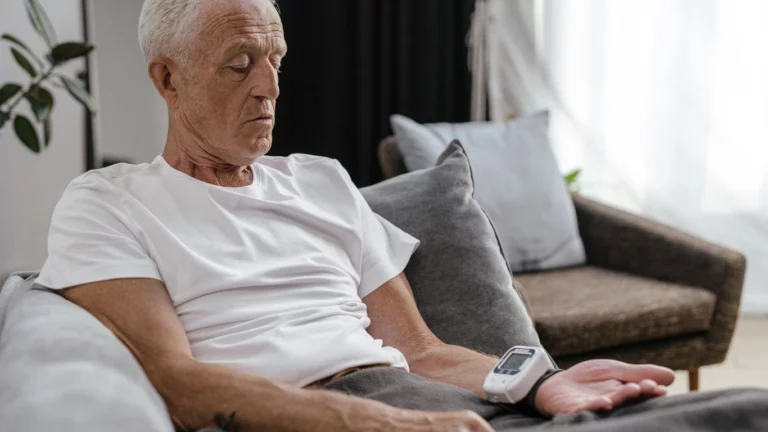
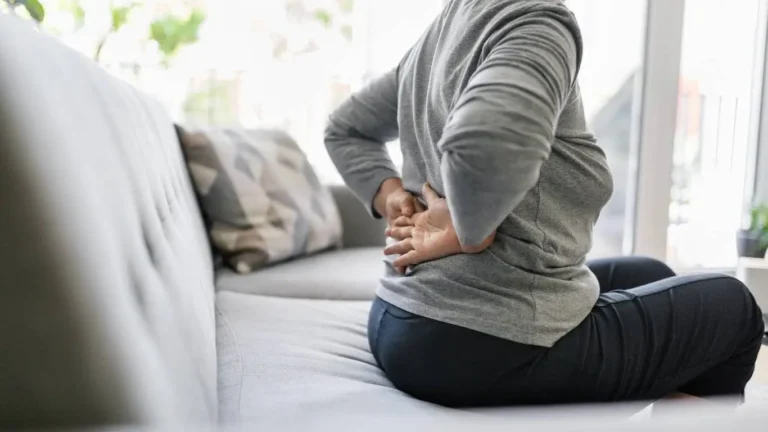
Why Back Pain In Perimenopause Can Disrupt Midlife And How To Fix It
Back pain is something most of us brush off as part of life, especially as we move into our 40s and beyond. But when it started creeping into my mornings—tightness in my lower back, a dull ache that refused to budge—I had no idea it was linked to perimenopause. If you’re in your 30s, 40s, or even early 50s and wondering why your back suddenly feels like it’s aged a decade overnight, you’re not imagining things. The connection between hormonal changes and back pain in perimenopausal and midlife women is very real—and far more common than most realize.
Why Back Pain Becomes a Midlife Companion
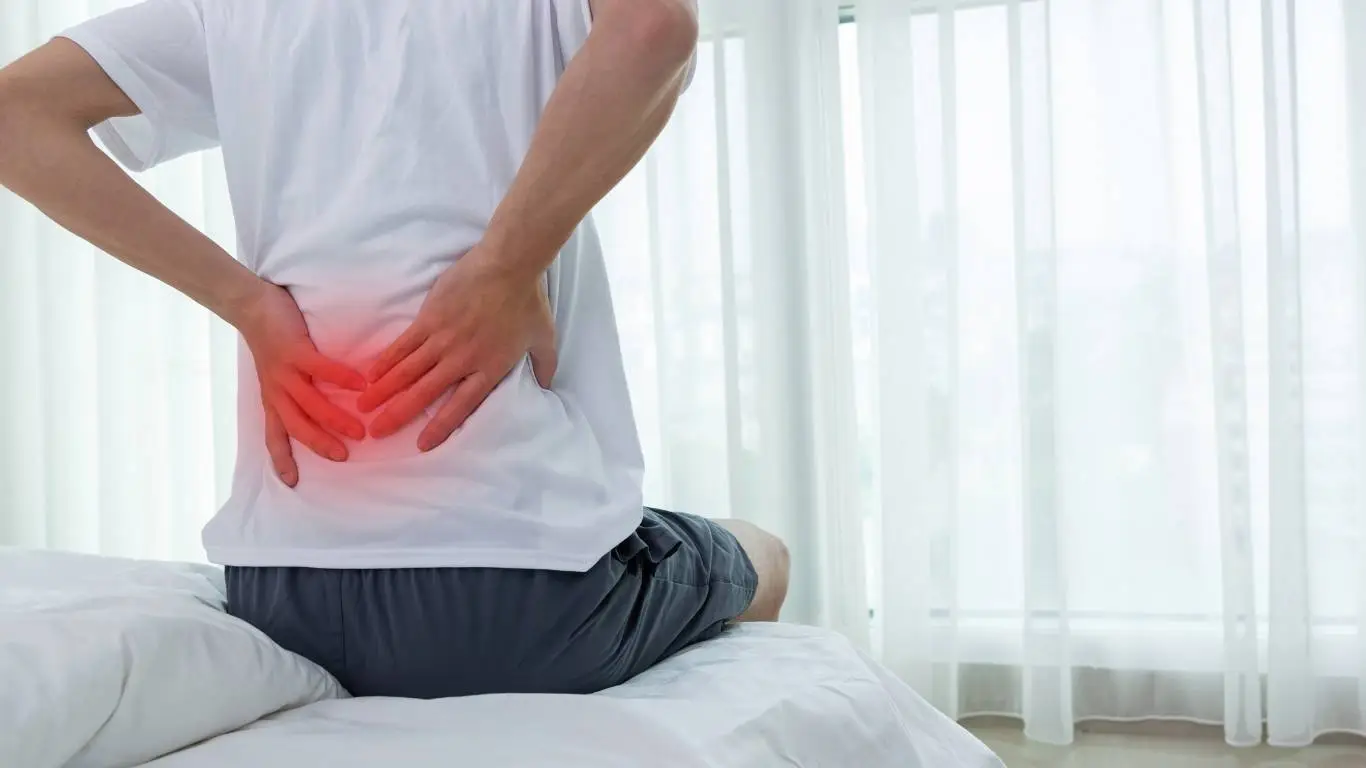
Perimenopause can feel like nature playing tricks on you. One minute you’re fine, the next you’re dealing with sore joints, unpredictable moods, and yes—persistent back pain. This isn’t just coincidence. Hormonal fluctuations during this time directly affect muscle and bone health, which often shows up first as back stiffness or discomfort.
Estrogen’s Role in Spine and Joint Health
One of the lesser-known roles of estrogen is maintaining muscle mass, joint lubrication, and bone density. As levels start to dip in perimenopause, the spine—particularly the lumbar area—takes the hit. Less estrogen means decreased disc hydration and joint flexibility. It’s no wonder so many women start waking up with tight lower backs or feeling sore after simple tasks.
The Midlife Posture Problem
Another contributor is subtle but serious—poor posture. I noticed this myself working remotely during the pandemic. Hours hunched over my laptop with barely a stretch break. Turns out, this is a massive issue for women in their 40s and 50s. Muscles weaken, alignment shifts, and chronic posture issues suddenly become painful. And that’s even without major spinal problems.
- Rounded shoulders from desk jobs
- Anterior pelvic tilt from weakened glutes and core
- Tight hamstrings and hip flexors causing lumbar strain
It’s not always a structural problem—it’s how we’ve moved (or not moved) for years.
Perimenopause, Sleep, and the Nighttime Pain Cycle

If your back pain flares at night, you’re not alone. Hormone-related sleep disruptions are notorious during perimenopause. Combine that with inflammation and muscular tension? Recipe for miserable nights and achy mornings. Nighttime back pain isn’t just a nuisance—it starts impacting mental health, productivity, and your quality of life.
Cortisol, Sleep & Pain Sensitivity
What surprised me the most was learning that poor sleep raises cortisol, which makes you more sensitive to pain. It’s a vicious loop: pain keeps you awake, and sleep deprivation makes the pain worse. According to ncbi.nlm.nih.gov, cortisol dysregulation is significantly linked to chronic pain in menopausal women.
Back Pain vs. Hormonal Weight Gain
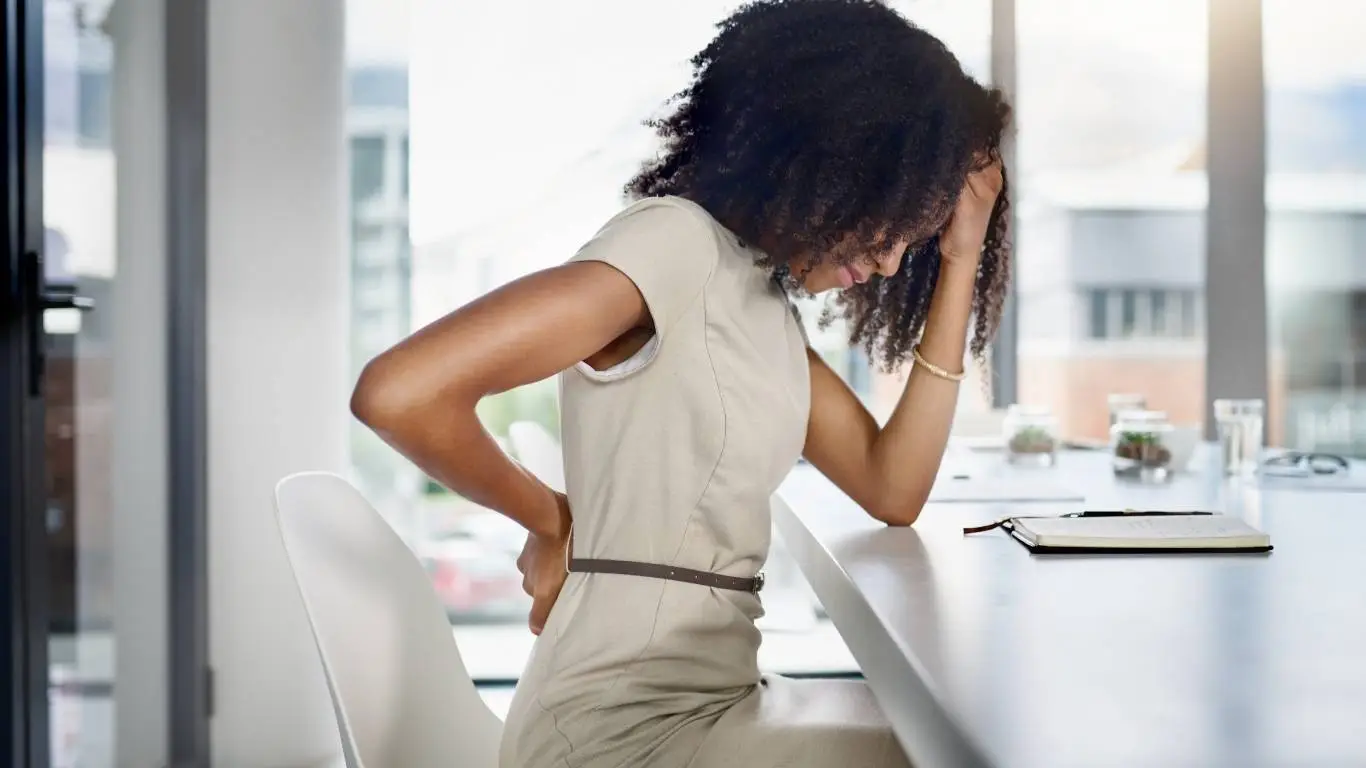
Let’s talk about the elephant in the room—weight gain during midlife. Even a small increase puts added pressure on your spine and joints. This isn’t about vanity. That extra belly fat isn’t just soft tissue—it shifts your center of gravity, strains your posture, and loads your lower back. It also promotes inflammation.
- Extra weight increases lumbar compression
- Fat accumulation raises systemic inflammation
- Weak core = more instability and pain
Here’s a closer look at how weight gain affects back pain and what you can do about it.
Movement Matters: The Right Exercises for Midlife Backs
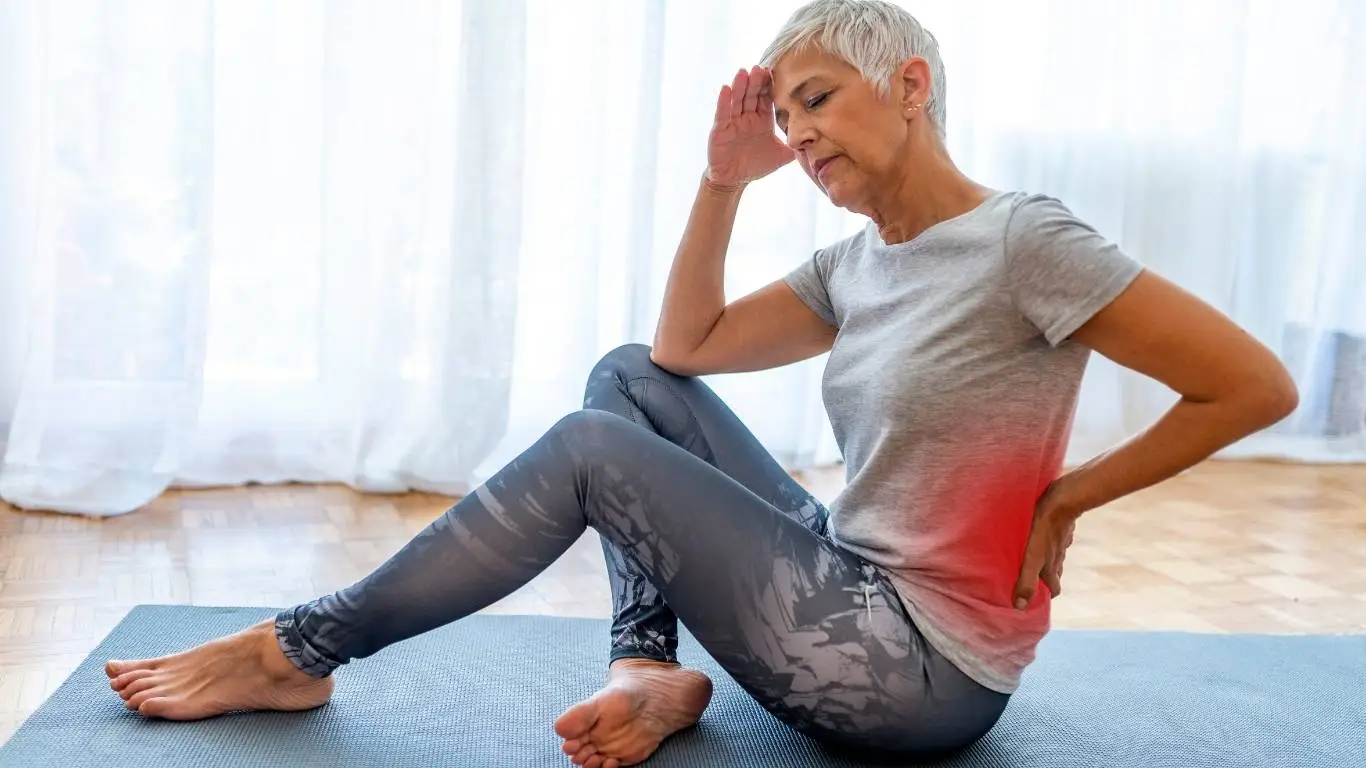
Exercise is non-negotiable, but let’s get real: what worked in your 20s might not work now. High-impact cardio can aggravate back issues, especially if your joints are inflamed. What helped me was shifting to more restorative, low-impact options that strengthen and stabilize without overloading my spine.
Top Picks That Actually Work
- Pilates: Supports core engagement and posture correction. See why it’s great for back health.
- Yoga: Enhances flexibility, reduces stress, and eases tight muscles. Effective poses for relief.
- Walking: Gentle on joints, great for circulation and inflammation control.
Strength training is also essential. Don’t worry, it doesn’t mean deadlifts on day one. Resistance bands and bodyweight squats are perfect starters. And let’s not forget the importance of glutes! Weak glutes are a hidden cause of back strain in women over 40.
Mental Load, Mood Swings & Tension in the Back
Perimenopause isn’t just about hot flashes and missed periods—it messes with your brain too. The emotional toll of hormone shifts adds to the physical tension in your body. Ever notice your shoulders creeping up when you’re stressed? That tension pools in your neck and upper back, creating knots and spasms you can’t massage away.
This is where the emotional-physical connection really hits. Chronic pain and low mood feed each other. And during perimenopause, this link strengthens. Incorporating mindfulness practices and even talking to someone helped me tremendously—not just in pain management but in clarity and daily focus.
For a deeper dive into the mental-emotional back pain link, check out this guide on mental and emotional aspects of back pain.
And to understand the broader picture of what causes these discomforts during midlife transitions, the main back pain overview provides an excellent foundation.
Smart Daily Habits That Reduce Back Pain in Perimenopause

I’ll be honest—there’s no magic bullet. But there are small, consistent actions that can make a real difference. When I started prioritizing these little habits, my back stopped screaming at me every morning. The key is awareness and adjustment, not perfection.
Stretching First Thing in the Morning
Simple spine mobility stretches right after waking can unlock tightness and prevent stiffness from setting the tone for your whole day. These daily stretches take less than five minutes, and they’re a lifesaver—especially after a restless night.
Ergonomic Awareness
Adjusting my desk setup felt unnecessary at first, but wow, what a difference. Midlife bodies don’t bounce back the same way. Bad ergonomics during work hours translate directly to nighttime soreness. A better chair, screen height, and even foot positioning all matter now more than ever.
Regular Movement Breaks
Our spines were not made for sitting six hours straight. I use the Pomodoro method—not for productivity—but just to remind myself to stand up, stretch, and breathe every 25 minutes. Small movements like walking to the kitchen or gentle twists help loosen things up.
- Set a reminder to stand and stretch hourly
- Use a lumbar cushion when sitting long periods
- Swap sitting with standing desk time when possible
Nutrition That Nourishes the Spine
I used to roll my eyes at anti-inflammatory diets—until I tried one. The bloating went down, my joints felt less cranky, and yes—my back hurt less. What you eat either fuels inflammation or fights it. During perimenopause, reducing inflammatory triggers becomes crucial for joint and disc comfort.
Focus on Anti-inflammatory Staples
- Fatty fish like salmon for omega-3s
- Turmeric and ginger for natural pain relief
- Leafy greens for magnesium and calcium support
- Berries for antioxidants
Don’t forget hydration—discs are made of water. Dehydration means stiffer joints. I carry a water bottle everywhere now, even around the house.
Watch for Deficiencies
Vitamin D deficiency is rampant in midlife women and quietly contributes to both bone pain and low energy. A simple blood test helped me identify it, and within weeks of correcting it, I felt stronger overall. Read more on how low vitamin D worsens back pain.
Alternative Relief That Actually Helps
I’ll be honest, I was skeptical about acupuncture until I tried it during a particularly painful flare-up. The relief wasn’t instant, but after a few sessions, my body started responding. When conventional methods don’t give lasting results, it’s okay to explore beyond the standard treatments.
Popular Alternatives Midlife Women Swear By
- Acupuncture for circulation and nerve stimulation
- Massage therapy to ease tension and muscle knots
- Cupping therapy for deep tissue circulation
- CBD oil for inflammation control and relaxation
These are not miracle cures, but they help reduce the frequency and intensity of pain episodes—especially when used alongside stretching and movement.
When to Take It Seriously

Not every ache is harmless. I delayed getting checked far too long—thinking it was just a “phase.” If your pain is worsening, shooting down your legs, or disrupting daily life, it’s time to dig deeper. In some cases, it could be lumbar radiculopathy, a disc issue, or even hormone-exacerbated inflammation around nerve roots.
Know the Red Flags
- Back pain with numbness or tingling
- Sharp pain after lifting or twisting
- Back pain that doesn’t improve with rest
- Pain with fever or unexplained weight loss
Learn more about warning signs that shouldn’t be ignored and advocate for proper diagnostic imaging when necessary.
Back-Smart Travel, Sleep & Lifestyle Adjustments
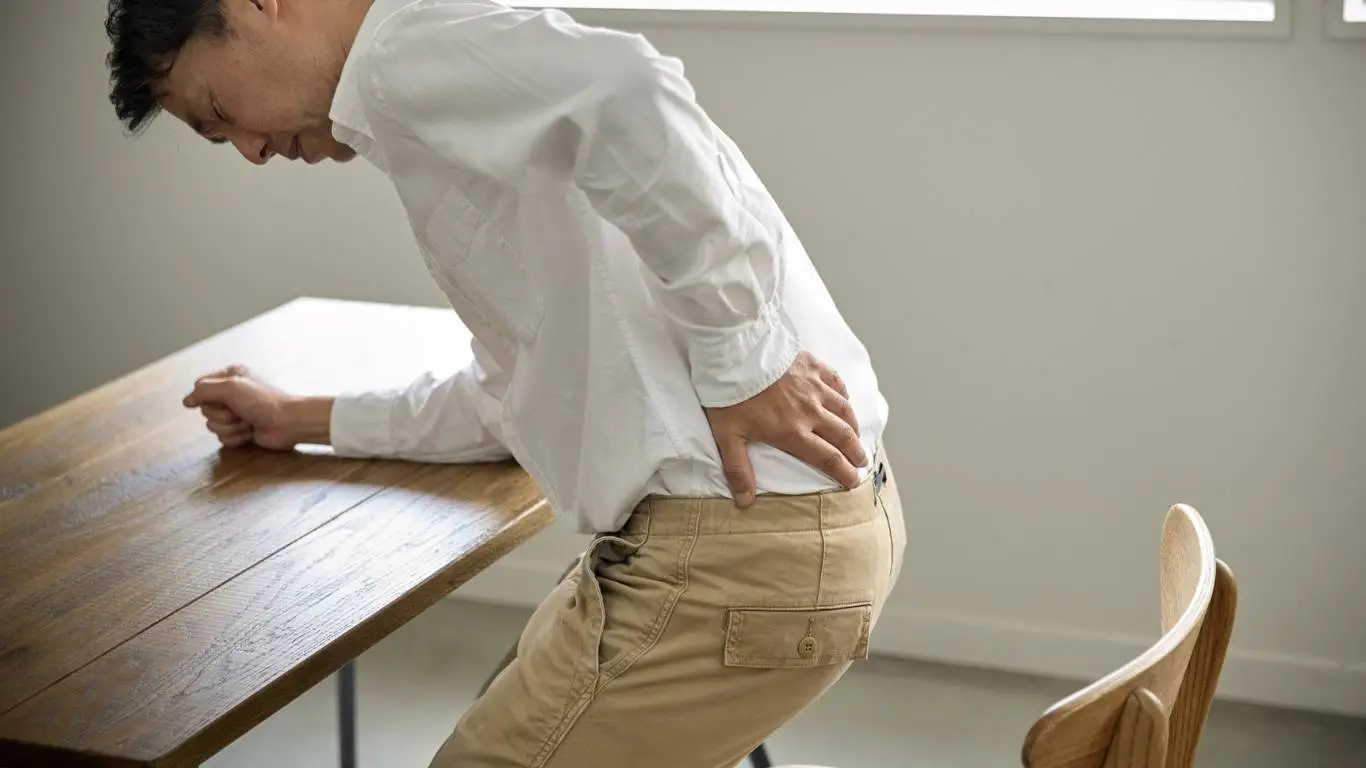
Perimenopause back pain doesn’t pause for travel, long flights, or poor mattresses. I learned this the hard way during a vacation where I barely slept due to a hotel bed from hell. These small hacks now travel with me—and they work.
Quick Lifestyle Tweaks That Ease the Load
- Use pillows to support spinal alignment at night
- Switch to a firm mattress that distributes weight evenly
- Practice smart travel tips for flights and road trips
- Keep a lumbar cushion in your car and work chair
Little by little, your habits either support your back or strain it. With perimenopause in the mix, it’s crucial to be kind to your spine—everywhere, every day.
And if you’re navigating the broader impact of lifestyle and self-care strategies, explore this detailed guide to natural remedies and daily habits for back pain. You’ll find practical ways to care for your body without relying solely on pills or procedures.
For a full picture on the science, causes, and evolving treatments behind back pain during midlife, don’t miss the expert-backed information on Healthusias’ main back pain resource.

Camellia Wulansari is a dedicated Medical Assistant at a local clinic and a passionate health writer at Healthusias.com. With years of hands-on experience in patient care and a deep interest in preventive medicine, she bridges the gap between clinical knowledge and accessible health information. Camellia specializes in writing about digestive health, chronic conditions like GERD and hypertension, respiratory issues, and autoimmune diseases, aiming to empower readers with practical, easy-to-understand insights. When she’s not assisting patients or writing, you’ll find her enjoying quiet mornings with coffee and a medical journal in hand—or jamming to her favorite metal band, Lamb of God.