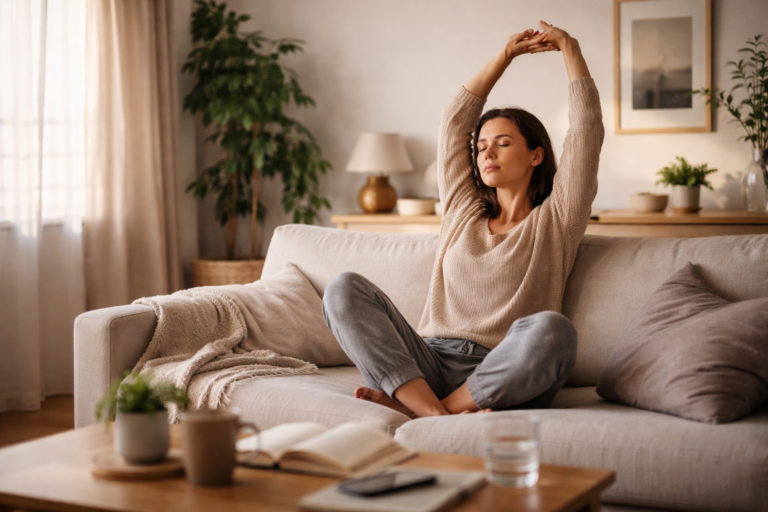
Why Your Body Feels Stiff After Sitting Too Long
That first moment after standing up can feel oddly surprising. Your legs hesitate, your back feels tight, and there is a brief sense that your body needs a second to catch up. It is a familiar pause many people notice after sitting for a while, especially during long workdays or quiet evenings.
This stiff, almost rusty feeling tends to show up without warning. You might not feel uncomfortable while sitting, but once you rise, the sensation becomes clear. It is common, everyday, and often confusing because nothing dramatic seems to have happened. You were just sitting.
For many adults, this experience becomes part of the daily rhythm. It shows up after scrolling on a phone, driving for an extended stretch, watching a show, or working at a desk. The body responds in subtle ways to how it is held, and stiffness after sitting is one of the most noticeable signals.
Why Your Body Feels Stiff After Sitting Too Long is a topic rooted in posture awareness. Not posture in a strict or corrective sense, but in how we naturally position ourselves when we are focused, relaxed, or distracted.
When sitting feels effortless, posture often fades from attention. Shoulders round slightly, the head drifts forward, and the lower back softens into the chair. None of this feels wrong in the moment. The body simply adapts to the shape it is given.
This article offers a calm explanation of why stiffness tends to appear after sitting and how posture awareness plays a quiet role in that experience.
Search preview: Many people notice stiffness when standing up after sitting for long periods. This everyday experience is often connected to posture habits and how the body holds itself during rest and focus.
How Stiffness Commonly Shows Up
The sensation is rarely dramatic. It might feel like tight hips, a heavy lower back, or knees that need a few steps to feel normal again. Sometimes the upper body joins in, with shoulders that resist movement or a neck that wants to be stretched.
What makes this experience relatable is how brief yet noticeable it is. After a short walk or gentle movement, the stiffness often fades. Still, the repetition of this pattern catches attention, especially when it happens multiple times a day.
People often describe it as feeling older than they expect or temporarily out of sync. The body feels capable, but not immediately responsive.
These moments are not dramatic signals. They are more like quiet feedback, reminding you how long you stayed in one position.
The Role Of Sitting Posture
Posture during sitting tends to develop without much thought. When attention is focused on a screen, conversation, or task, the body naturally seeks ease. Over time, this ease often looks like slouching, leaning, or holding the head forward.
These positions are not mistakes. They are comfortable responses to stillness. However, staying in them for extended periods means the body gets used to a specific shape.
When you stand up, the body transitions from that shape into a more upright one. That change can feel abrupt. Muscles that were shortened or relaxed suddenly need to engage, while others lengthen again.
This shift is where stiffness often appears. It is not about something being wrong, but about the body readjusting after staying still in a familiar posture.
Why Awareness Matters More Than Correction
Posture awareness is less about sitting perfectly and more about noticing patterns. Many people assume posture only matters if pain is present. In reality, subtle awareness can explain everyday sensations like stiffness.
When posture is unnoticed, the body stays still longer. When awareness gently returns, movement often follows naturally.
This awareness does not require rules or constant adjustments. It can simply be recognizing how long you have been sitting and how your body feels when you change positions.
Stillness And Time
Time plays a quiet role in stiffness. Sitting for a few minutes rarely creates the same sensation as sitting for an hour. The longer the body stays still, the more it settles into that position.
In daily life, time passes easily when you are engaged. A meeting runs long, a show continues into the next episode, or work pulls you into deep focus.
The body does not always signal discomfort during these moments. Instead, it speaks up when movement resumes.
That stiffness can be seen as a gentle reminder that the body prefers variety, even when comfort feels effortless.
Everyday Environments That Encourage Stiffness
Modern environments are designed for sitting. Chairs are everywhere, and screens encourage stillness. Cars, couches, desks, and cafes all invite the body to remain in one place.
Many chairs support relaxation more than movement. Deep seats, soft cushions, and armrests make it easy to settle in.
While these features feel pleasant, they also make it easier to forget posture altogether. The body rests, but it also becomes less active.
When standing up, the contrast between stillness and movement becomes noticeable.
Attention And Distraction
Posture often shifts most when attention is absorbed elsewhere. A phone, computer, or television pulls focus forward.
As attention narrows, the head leans in. Shoulders follow. The spine softens.
These changes are subtle and natural. They only become relevant when the body transitions back into motion.
The Familiar Confusion Around Stiffness
One reason this experience feels confusing is because it does not match effort. You were resting, not working hard. Yet the body responds as if it needs recovery.
This mismatch can lead to unnecessary concern or frustration. In reality, stiffness after sitting is often about adaptation rather than strain.
The body adapts quickly to stillness and just as quickly responds when that stillness ends.
Understanding this pattern helps reframe the experience as normal and temporary.
Posture Awareness As An Ongoing Practice
Posture awareness does not require constant monitoring. It is more like an occasional check-in.
Noticing how you are sitting, how long you have been there, and how your body responds when you stand creates a fuller picture of daily comfort.
This awareness often leads to natural shifts, like changing position, standing briefly, or adjusting how you sit without overthinking it.
Over time, these small moments of awareness can change how stiffness feels and how often it shows up.
How This Experience Fits Into Body Awareness
Stiffness after sitting is one of many everyday signals the body offers. It fits into a broader pattern of physical comfort and awareness.
Understanding these signals helps create a more relaxed relationship with the body. Instead of reacting, you begin to observe.
If you are interested in exploring related everyday experiences, this overview of physical comfort and body awareness offers additional context.
Explore everyday body comfort and awareness
A Gentle Closing Perspective
Feeling stiff after sitting too long is not a failure of posture or movement. It is a common response to stillness in a world designed for sitting.
By noticing posture without judgment and recognizing how the body adapts, this everyday experience becomes easier to understand.
Rather than something to fix, stiffness can be seen as feedback. A quiet reminder that the body enjoys movement, variety, and gentle attention throughout the day.

Robin Abbott is a wellness and lifestyle writer at Healthusias, focusing on everyday health awareness, habits, and life optimization through clear, non-medical explanations.