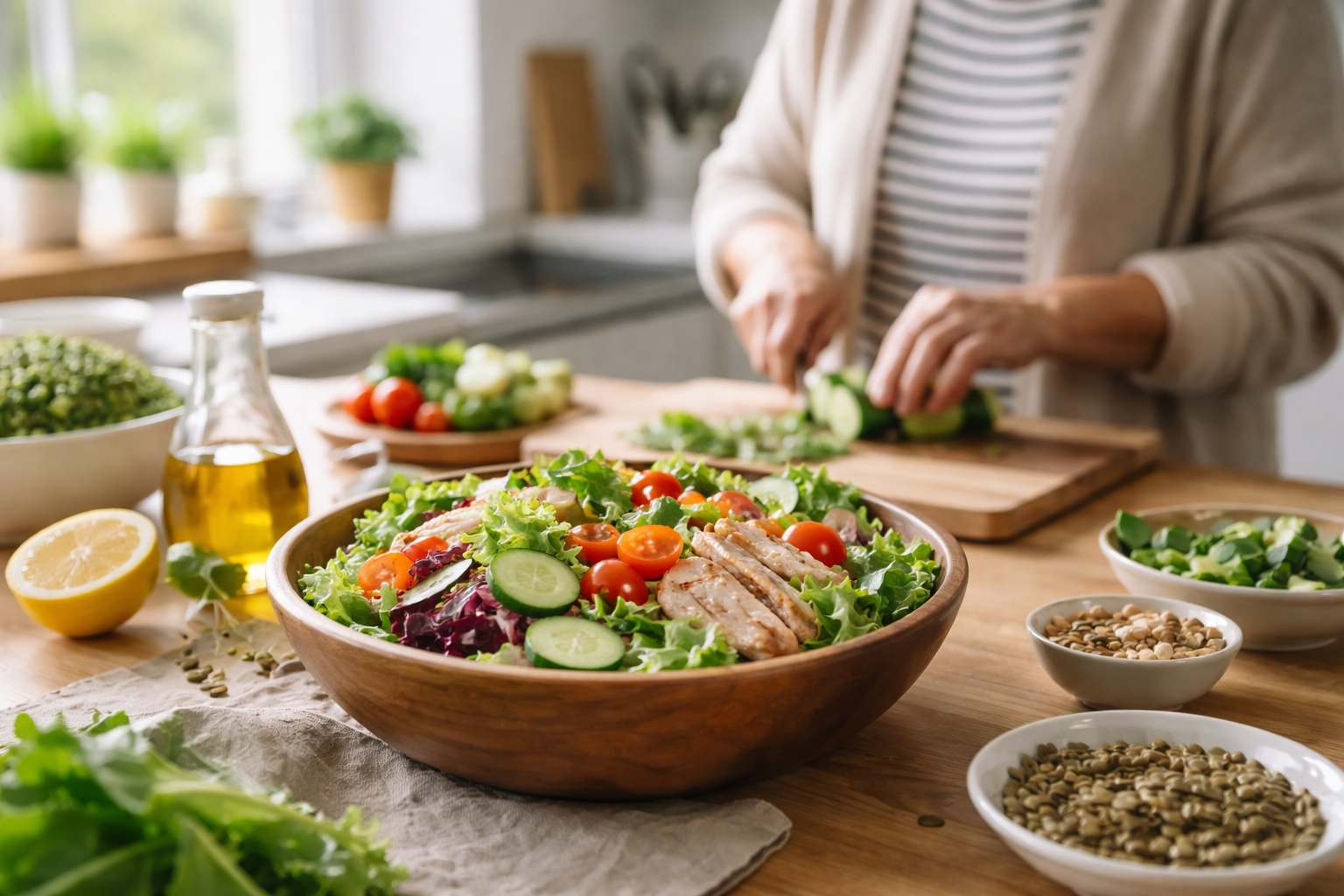
Kidney Friendly Salads: Fresh and Safe Choices for Kidney Patients
It’s common to reach for a quick salad when you want something light and healthy. But for people living with kidney concerns, even a simple bowl of greens can come with a lot of questions. Is this vegetable safe? What about the dressing? How much is too much?
Kidney friendly salads can absolutely be part of a balanced, satisfying routine. The key is understanding how certain ingredients affect the body and making small, thoughtful adjustments that keep meals both enjoyable and supportive.
Understanding Kidney Friendly Salads
At first glance, salads seem like the safest option on any menu. Fresh vegetables, minimal cooking, and plenty of nutrients. However, when kidney function is reduced, the body may struggle to manage certain minerals like potassium, phosphorus, and sodium.
This doesn’t mean salads are off-limits. Instead, it means being selective about what goes into them.
A kidney-conscious salad typically focuses on:
- Lower-potassium vegetables
- Fresh, minimally processed ingredients
- Controlled portion sizes
- Simple, low-sodium dressings
If you’re unsure where to start, exploring this broader kidney health resource hub can help you understand how food choices fit into the bigger picture.
Why Some Salad Ingredients Need Attention
Many people are surprised to learn that not all vegetables are equal when it comes to kidney health.
For example:
- Spinach, tomatoes, and avocados are nutrient-rich but high in potassium
- Processed toppings like croutons or deli meats often contain high sodium
- Store-bought dressings can be loaded with hidden phosphorus additives
That doesn’t mean you need to avoid these entirely, but balance becomes important.
A Simple Way to Support Kidney Health Without Overthinking Every Meal
If you often feel unsure about what foods are safe, having a clear, structured guide can take the guesswork out of daily choices.
Explore a more guided approach to kidney-friendly eating
What Influences a Kidney-Safe Salad
Building a salad that supports kidney health isn’t about strict rules. It’s about understanding a few key factors that influence how your body responds.
Potassium Levels
Potassium helps regulate muscle and nerve function, but when kidneys are not working efficiently, levels can build up in the blood.
Lower-potassium salad options often include:
- Lettuce (romaine, iceberg)
- Cucumbers
- Bell peppers
- Cabbage
If you want a deeper breakdown of safe produce choices, this guide on vegetables that are easier on the kidneys can be helpful.
Sodium Content
Sodium can contribute to fluid retention and increase blood pressure, which may place extra strain on the kidneys.
Common high-sodium salad additions include:
- Packaged dressings
- Pickled vegetables
- Processed meats
Switching to homemade dressings using olive oil, lemon juice, or vinegar can make a noticeable difference.
Protein Portions
Protein is essential, but too much can be difficult for the kidneys to process in certain situations.
Instead of large portions, many people find it helpful to:
- Add small amounts of grilled chicken or fish
- Use eggs or tofu in moderation
- Focus on vegetables as the base
Common Experiences People Have With Salads
Many people trying to eat better for kidney health run into similar challenges.
One common pattern is feeling overwhelmed. A salad that once felt “healthy” suddenly feels complicated when you start thinking about potassium or sodium.
Another experience is inconsistency. Some days meals feel well-balanced, and other days it’s easy to fall back on convenience foods that may not be as kidney-friendly.
There’s also the issue of hidden ingredients. Even something as simple as a salad dressing can contain additives that aren’t obvious at first glance.
This is why many people begin to look beyond individual foods and instead focus on overall patterns, like those outlined in this overview of foods that support kidney function.
Practical Ways to Build Kidney Friendly Salads
In everyday routines, the goal isn’t perfection. It’s making small, repeatable choices that add up over time.
Start With a Simple Base
Choose greens that are generally lower in potassium, such as:
- Iceberg lettuce
- Romaine lettuce
- Mixed greens (in moderation)
These provide texture and volume without overwhelming mineral intake.
Add Crunch and Variety
Texture makes salads more satisfying. Try adding:
- Sliced cucumbers
- Shredded carrots (in small amounts)
- Red cabbage
- Bell peppers
These ingredients keep meals interesting without adding unnecessary risk.
Be Mindful With Toppings
Toppings can quickly change the nutritional profile of a salad.
Instead of:
- Processed meats
- Cheese-heavy additions
- Salted nuts
Consider:
- Grilled chicken (small portions)
- Unsalted seeds
- Hard-boiled eggs (moderation)
Keep Dressings Simple
One of the easiest adjustments is making your own dressing.
A basic option:
- Olive oil
- Lemon juice or vinegar
- Fresh herbs
This avoids hidden sodium and phosphorus additives often found in packaged products.
When People Start Looking for More Structure
At some point, many people realize that guessing what’s “safe” can feel tiring. Even with the best intentions, it’s easy to second-guess choices or worry about long-term effects.
This is often the gap: knowing general advice but not having a clear, consistent plan to follow.
That’s when more structured guidance becomes useful. For example, some people explore approaches outlined in ways to support kidney function through daily habits to bring more clarity to their routine.
Instead of focusing on individual meals, the focus shifts toward patterns that are easier to maintain.
Small Adjustments That Make a Difference
Many people notice improvements in how they feel when they:
- Plan meals ahead of time
- Keep ingredients simple
- Avoid highly processed foods
- Pay attention to portion sizes
These changes don’t require drastic restrictions. They simply create a more stable and predictable eating pattern.
FAQ: Kidney Friendly Salads
Can I eat salads every day with kidney concerns?
Many people can enjoy salads regularly, but the ingredients and portion sizes matter. Rotating vegetables and keeping balance in mind is often helpful.
Are raw vegetables better than cooked ones?
Not necessarily. Both raw and cooked vegetables have benefits. In some cases, cooking can reduce certain mineral levels, but it depends on the food.
Is store-bought dressing okay?
Some options may be fine in small amounts, but many contain added sodium and preservatives. Reading labels or making your own can give you more control.
What’s the biggest mistake people make?
One common mistake is assuming all vegetables are automatically safe. Paying attention to specific nutrients like potassium can make a meaningful difference.
Do I need to completely avoid high-potassium foods?
Not always. In many cases, it’s about moderation and balance rather than complete avoidance.
Looking for a Clear Plan to Simplify Kidney-Friendly Eating?
If you’re feeling unsure about what to eat day to day, a structured approach can make things easier to follow and less stressful over time.
Explore options that help you stay consistent with your food choices
Kidney friendly salads don’t have to feel restrictive or confusing. With a better understanding of ingredients and a few simple habits, they can become a reliable, enjoyable part of everyday meals. If you’re trying to build consistency, start small, stay mindful, and adjust as you learn what works best for your routine.

Robin Abbott is a wellness and lifestyle writer at Healthusias, focusing on everyday health awareness, habits, and life optimization through clear, non-medical explanations.