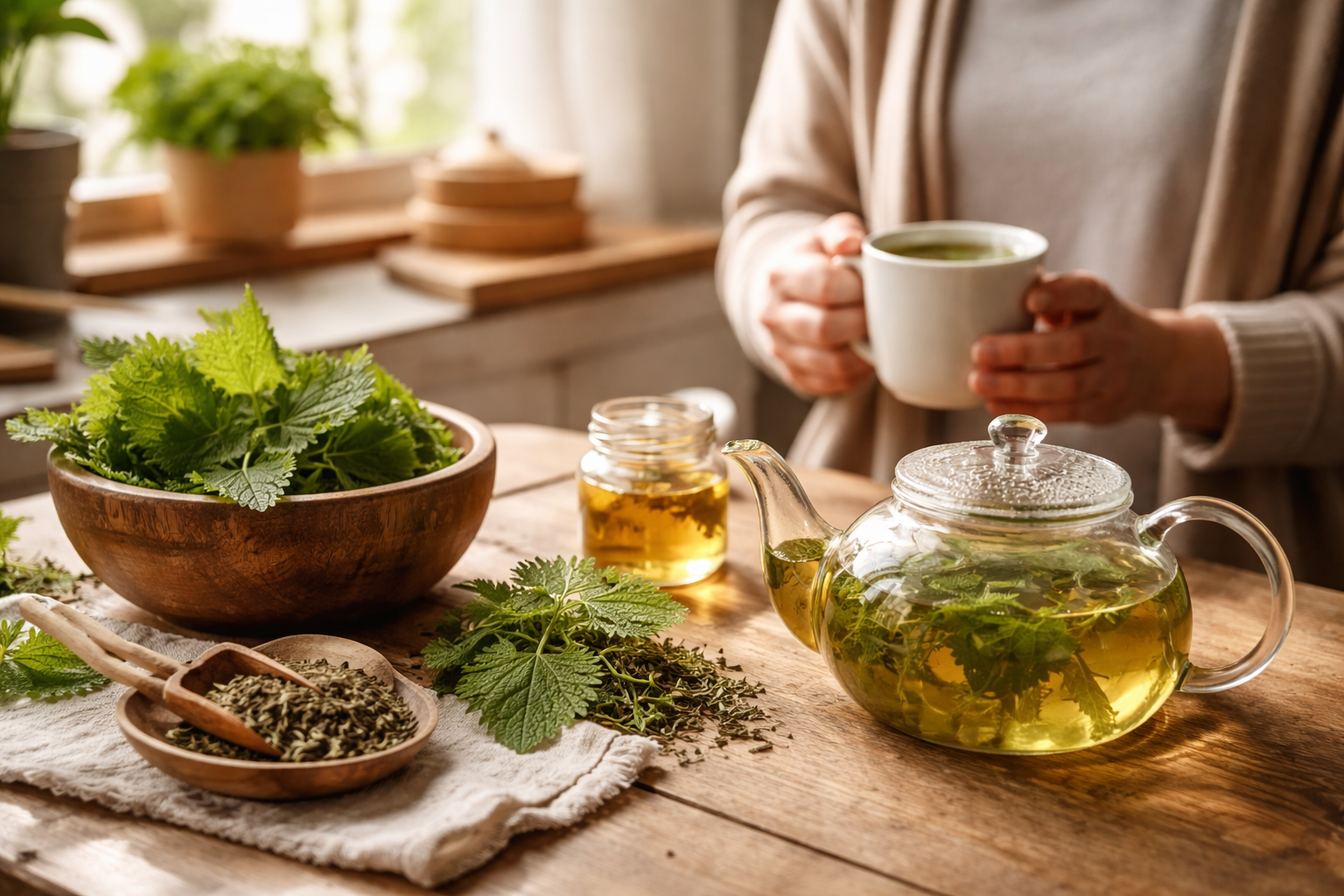
Nettle Leaf for Kidney Health: How It Helps Support Kidney Function
Many people first hear about herbs like nettle leaf while searching for natural ways to support their overall health. It often comes up in conversations about urinary wellness or herbal teas, especially among those looking for gentle, plant-based options. One topic that frequently sparks curiosity is nettle leaf for kidney health and how it may play a supportive role in the body.
Rather than being a quick fix, nettle leaf is typically discussed as part of a broader approach to maintaining kidney function. Understanding how it works, what influences its effects, and how people experience it in daily life can help make sense of its place in natural health discussions.
What Is Nettle Leaf and Why Is It Connected to Kidney Health?
Nettle leaf comes from the stinging nettle plant, a green leafy herb that has been used in traditional practices for centuries. While the plant itself is known for its tiny stinging hairs, the processed leaf used in teas and supplements is handled in a way that removes this effect.
When people talk about nettle leaf in relation to kidney health, they are usually referring to its potential role in supporting the body’s natural fluid balance and urinary processes. The kidneys are responsible for filtering waste and maintaining proper fluid levels, so anything that gently interacts with these systems tends to attract attention.
Nettle leaf is often described as having mild diuretic-like properties. This means it may support the body’s natural process of producing and eliminating urine. In everyday terms, this can be connected to how the body manages excess fluids and waste.
It’s important to note that these effects are generally discussed in the context of overall wellness, not as a treatment for specific conditions.
How Nettle Leaf May Influence Kidney Function
To understand how nettle leaf fits into kidney health discussions, it helps to look at a few key areas where it may have an indirect influence.
1. Supporting Fluid Balance
The kidneys regulate how much fluid stays in the body and how much is excreted. Some herbal traditions suggest that nettle leaf can gently encourage normal urine flow, which may help the body maintain this balance.
2. Providing Plant-Based Nutrients
Nettle leaf contains naturally occurring compounds such as vitamins, minerals, and antioxidants. These nutrients are often associated with general cellular health, which can indirectly support organ function over time.
3. Encouraging Natural Detox Pathways
While the term “detox” is often overused, the body already has built-in systems—like the kidneys—for removing waste. Herbs like nettle leaf are sometimes included in routines that aim to support these natural processes.
These influences are subtle and tend to be part of a broader lifestyle approach rather than a standalone solution.
Ad
A More Practical Way to Understand Kidney-Friendly Habits
Instead of trying to piece together scattered tips about herbs, diet, and lifestyle, some people prefer seeing how everything fits into one simple structure.
Explore how this guide is organized step by step
Factors That Influence How Nettle Leaf Works in the Body
Not everyone experiences herbs in the same way. Several factors can influence how nettle leaf interacts with the body, especially when it comes to kidney-related processes.
Hydration Levels
Fluid intake plays a major role in kidney function. People who stay well-hydrated may notice different effects compared to those who don’t drink enough water.
Overall Diet
A diet high in processed foods, sodium, or sugar can place additional strain on the kidneys. In contrast, a balanced diet rich in whole foods may better support the body’s natural systems, including how herbs are processed.
Existing Health Conditions
Individuals with underlying kidney concerns or other chronic conditions may experience herbs differently. This is one reason why many people approach herbal use cautiously and seek reliable information before adding anything new.
Consistency of Use
Herbal approaches are often associated with gradual, consistent use rather than immediate results. Some people incorporate nettle leaf into daily routines like tea drinking, while others use it occasionally.
How People Typically Experience Nettle Leaf
In everyday life, nettle leaf is most commonly consumed as a tea or included in herbal blends. People who use it regularly often describe subtle, gradual effects rather than dramatic changes.
Some commonly reported experiences include:
- A sense of improved hydration awareness
- More frequent urination, especially when taken as tea
- A feeling of supporting overall wellness routines
It’s worth noting that these experiences vary widely. For some, the effects are barely noticeable, while others feel that it fits well into their daily health habits.
This variability is part of why nettle leaf is usually discussed as a supportive element rather than a central solution.
Related Lifestyle Considerations for Kidney Health
While herbs like nettle leaf can be part of the conversation, kidney health is influenced by a wide range of daily habits. Looking at the bigger picture often provides more clarity than focusing on a single ingredient.
Balanced Fluid Intake
Drinking enough water is one of the simplest ways to support kidney function. The body relies on adequate hydration to filter waste efficiently.
Dietary Awareness
Foods rich in fruits, vegetables, and whole grains are often associated with better overall health. Reducing excessive sodium and processed foods may also help ease the workload on the kidneys.
Physical Activity
Regular movement supports circulation and metabolic processes, both of which are connected to how organs function over time.
Herbal Integration
For those interested in plant-based approaches, nettle leaf is often discussed alongside other options. You can explore a broader overview of supportive herbs in this guide on kidney-friendly herbs or learn how herbal drinks fit into routines through herbal tea approaches for kidney wellness.
When People Start Exploring Natural Kidney Support Options
Interest in herbs like nettle leaf often grows gradually. People may begin looking into these options when they:
- Become more aware of long-term health habits
- Want to support their body’s natural systems
- Feel overwhelmed by conflicting health advice
- Prefer gentle, lifestyle-based approaches
At this stage, it’s common to explore broader educational resources that connect different aspects of kidney health. For example, some readers look into a more complete overview like the chronic kidney disease guide to better understand how lifestyle, diet, and natural approaches fit together.
Others may focus specifically on natural strategies through resources like natural approaches to kidney support, which bring together multiple ideas in one place.
Frequently Asked Questions
Is nettle leaf safe for everyday use?
Nettle leaf is commonly used in foods and teas, but individual responses can vary. Many people choose to use it in moderation as part of a balanced routine rather than relying on it heavily.
Does nettle leaf directly improve kidney function?
Nettle leaf is generally discussed as a supportive herb rather than something that directly changes kidney function. It may play a role in overall wellness habits that support the body’s natural processes.
How is nettle leaf usually consumed?
It is most often consumed as an herbal tea, though it can also appear in capsules or blended herbal formulas. Tea is the most common everyday form.
Can nettle leaf replace other kidney health habits?
Most discussions around kidney health emphasize a combination of hydration, diet, and lifestyle. Herbs like nettle leaf are usually seen as one small part of a much larger picture.
Where do people learn more about natural kidney support?
Some people explore structured resources that connect diet, habits, and herbal approaches. In some cases, readers look into guides that explain how these elements work together in a practical way.
Bringing It All Together
Nettle leaf for kidney health is best understood as a supportive, traditional herb that fits into a broader conversation about wellness. Its potential role in fluid balance and natural processes makes it a point of interest, but it is rarely viewed as a standalone solution.
For many people, the real value comes from combining small, consistent habits—like hydration, balanced nutrition, and thoughtful use of herbs—into a more complete approach.
If you’re trying to make sense of how these pieces connect, some readers find it helpful to explore a more structured overview of kidney-friendly habits through resources like this natural kidney support guide, which brings together multiple aspects in a clearer way.

Robin Abbott is a wellness and lifestyle writer at Healthusias, focusing on everyday health awareness, habits, and life optimization through clear, non-medical explanations.