Why Sitting Still Feels Harder Than Moving
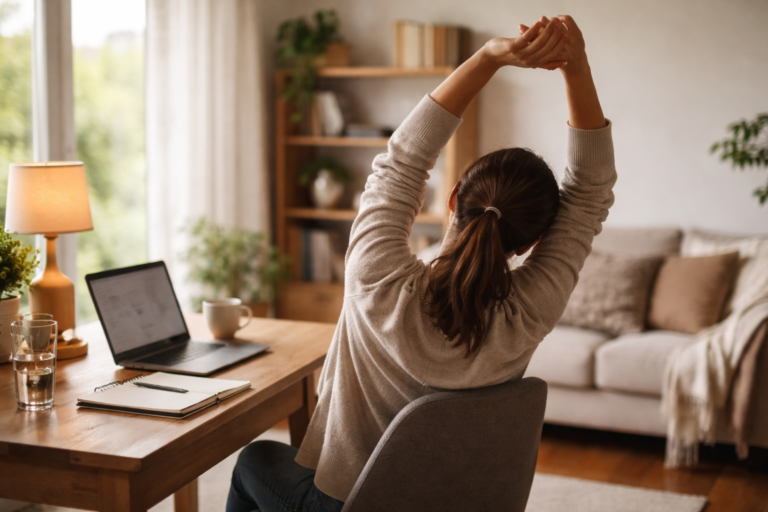
You sit down to relax, focus, or get something done, and within minutes there’s a strange urge to shift, stretch, tap your foot, or stand up again. The task itself might not even be difficult. Still, staying still feels oddly demanding, like your body didn’t get the memo that it’s time to pause.
This common experience catches people off guard because rest is supposed to feel easy. Movement takes effort, yet many everyday adults notice that being still can feel more uncomfortable than walking around, tidying up, or pacing during a phone call. That quiet tension between stillness and motion is part of a broader body awareness and physical comfort guide that shows up in ordinary routines.
Why Sitting Still Feels Harder Than Moving often has less to do with willpower and more to do with how the body and attention systems are used to operating during the day. Modern routines rarely involve long, uninterrupted stretches of true stillness, even if we think they do.
The Surprising Effort Of Being Still
At first glance, stillness seems like the lowest-energy option. You’re not lifting, carrying, or going anywhere. Yet the body doesn’t always experience it that way.
When you sit without moving, certain areas end up holding the same position for longer than they’re used to. Small background adjustments that usually happen automatically become more noticeable. A shoulder subtly tightens. A leg wants to reposition. Your back asks for a different angle. None of this is dramatic, but together it creates a steady stream of low-level signals that say, “Change something.”
Walking or moving around, on the other hand, spreads effort across the whole body. Weight shifts from side to side. Arms swing. Posture resets over and over. That built-in variety can actually feel easier than holding one pose, even if the activity itself uses more energy.
Daily Life Rarely Trains Us For Stillness
Think about a typical day. Even desk work often includes reaching for things, adjusting in the chair, standing to grab water, or turning to talk to someone. At home, there’s constant light motion—laundry, cooking, checking your phone while walking from room to room.
Because of this, the body gets used to frequent changes in position. Long stretches of sitting without much movement can feel unfamiliar, almost like asking a busy system to suddenly idle.
This is one reason people notice restlessness most during activities that ask for quiet focus: reading, watching something, working at a computer, or sitting through a meeting. The environment says “stay put,” while the body is used to small, regular shifts.
Attention And Movement Are Closely Linked
Stillness isn’t only physical. It’s also tied to how we use our attention.
Many people move more when they’re thinking, talking, or solving problems. Pacing during a call, doodling during a discussion, or fidgeting while concentrating are all familiar patterns. Movement can act like a background rhythm that helps the mind stay engaged.
When you remove that rhythm and try to sit completely still, your focus may feel less anchored. The urge to move isn’t just about muscles; it can be the mind looking for its usual support. A bouncing knee or shifting position sometimes appears right when concentration deepens.
The Quiet Role Of Built-Up Energy
Long periods indoors, screen time, and structured schedules can create a sense of stored-up energy that doesn’t always have a clear outlet. Even if you don’t feel “active,” the body may still expect moments of motion throughout the day.
When those moments don’t happen, sitting down can highlight that leftover energy. Instead of feeling restful, stillness becomes the point where you finally notice how much you want to move.
Comfort Isn’t Just About The Chair
It’s easy to assume that discomfort while sitting still must be about the seat, the desk, or posture. Those matter, but they’re only part of the picture.
Time of day, mental load, and how long you’ve been in one general mode all play a role. After hours of focused screen time, your whole system may feel ready for a change, even if the chair itself is fine. Late in the day, when energy naturally shifts, restlessness can feel stronger.
Emotional tone also blends in. Busy days often carry a low hum of urgency. When you finally sit down, the body doesn’t always switch to “off” right away. That leftover momentum can show up as the need to adjust, stretch, or get up again.
Why Movement Can Feel Calming
It seems backward, but gentle motion often feels more settling than forced stillness. Walking around the house, doing light tasks, or even standing and swaying slightly can create a sense of ease.
Movement gives the body ongoing feedback: where your weight is, how your limbs are positioned, how you’re balanced. That constant input can feel organizing. Sitting perfectly still reduces that flow of information, which for some people feels less comfortable rather than more.
This helps explain why people sometimes stand up during long calls, pace while thinking, or shift positions repeatedly while watching something. The motion isn’t random; it’s a way of keeping the system feeling balanced.
How This Shows Up In Everyday Routines
Most adults recognize moments like these:
- Feeling fine while moving around the house, then suddenly restless once you sit down to relax.
- Needing to change position several times during a movie or long video.
- Getting up frequently during focused work, even when you planned to stay seated.
- Finding it easier to think while walking than while sitting still.
None of these automatically mean something is wrong. They often reflect how modern routines mix long sitting periods with bursts of mental effort, indoor time, and limited natural movement variety.
Awareness Changes The Experience
This topic isn’t really about forcing yourself to sit perfectly still. It’s about noticing the pattern with less frustration.
When people understand that Why Sitting Still Feels Harder Than Moving is a common everyday situation, the experience can feel less confusing. Instead of seeing restlessness as a personal flaw, it becomes a signal about rhythm, routine, and how the day has been structured.
Paying attention to when the urge to move shows up—time of day, type of task, length of sitting—often reveals simple patterns. Maybe it happens most after long focus periods, or late in the evening, or during mentally demanding work.
That kind of awareness brings a sense of clarity. The goal shifts from “I should be able to sit still” to “I see how my body and attention naturally work.” For many people, that understanding alone makes the experience feel more manageable and less like a struggle.
In the end, stillness and movement aren’t opposites fighting each other. They’re parts of the same daily rhythm. When that rhythm leans heavily in one direction, the other starts to call for attention, and the body has its own quiet ways of letting you know.

Robin Abbott is a wellness and lifestyle writer at Healthusias, focusing on everyday health awareness, habits, and life optimization through clear, non-medical explanations.