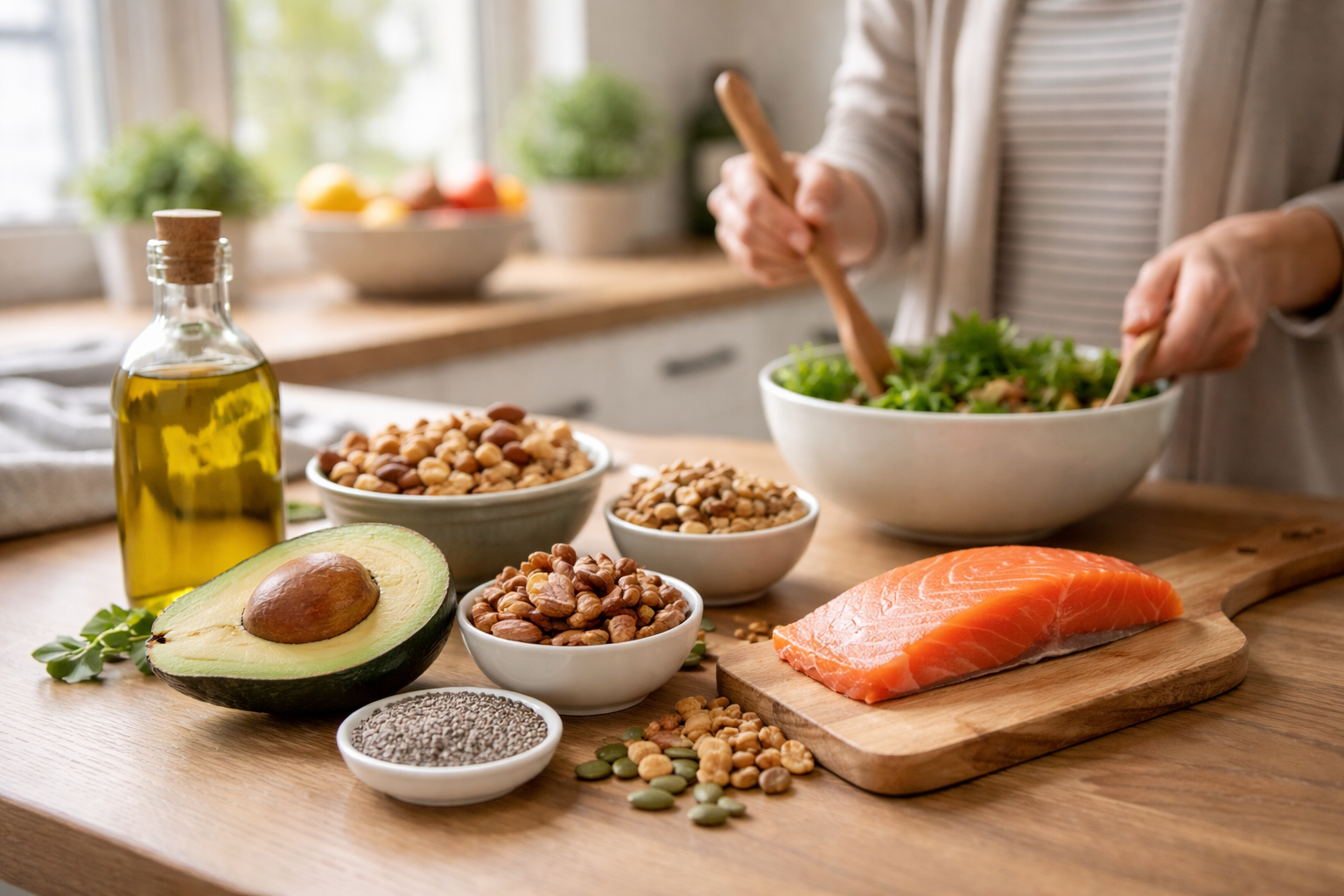
Healthy Fats for Kidney Health: Best Choices for a Renal Diet
Many people don’t think twice about the type of fat they use when cooking or eating out. A drizzle of oil, a handful of nuts, or a creamy dressing can feel like small details. But when kidney health becomes part of the conversation, those everyday choices start to matter more than expected.
For those paying closer attention to their diet, especially in relation to kidney function, understanding healthy fats for kidney health can feel confusing at first. Some fats are helpful, others less so, and the difference isn’t always obvious. The good news is that with a few clear principles, it becomes much easier to make balanced, supportive choices.
Understanding Healthy Fats for Kidney Health
Fats are an essential part of any diet. They help your body absorb vitamins, provide energy, and support overall cell function. But not all fats behave the same way in the body—especially when kidney health is involved.
In general, fats fall into a few main categories:
- Unsaturated fats – often considered heart- and kidney-friendly
- Saturated fats – okay in small amounts but should be limited
- Trans fats – best avoided whenever possible
For people thinking about kidney health, the focus tends to be on reducing inflammation and supporting cardiovascular health. This matters because the kidneys and heart are closely connected. When one system is under strain, the other often feels it too.
Unsaturated fats—especially those found in plant-based oils, nuts, seeds, and fish—are typically the best fit. They may help support healthy blood flow and reduce inflammation, both of which are helpful for kidney function over time.
If you’re building a broader understanding of how nutrition affects kidney function, this complete kidney health guide can provide helpful context.
Struggling to Build a Kidney-Friendly Diet That Actually Works?
Many people know they need to “eat better,” but feel stuck figuring out what that really looks like day to day. A structured guide can help simplify the process.
Explore a step-by-step approach to kidney support
What Influences How Fats Affect the Kidneys?
The impact of dietary fat isn’t just about the type of fat itself. Several factors influence how your body—and your kidneys—respond to it.
Overall Diet Pattern
Fats don’t work in isolation. A diet high in processed foods, sodium, and added sugars can offset the benefits of healthy fats. On the other hand, a balanced pattern that includes whole foods tends to support better outcomes.
For example, combining healthy fats with fiber-rich vegetables and whole grains often leads to more stable energy levels and better metabolic health.
Inflammation Levels
Chronic low-grade inflammation is a common concern in kidney-related conditions. Some fats, particularly trans fats and excess saturated fats, may contribute to inflammation. In contrast, omega-3 fatty acids—found in foods like salmon, walnuts, and flaxseeds—are known for their anti-inflammatory properties.
If you’re curious about how inflammation connects to food choices, this guide to anti-inflammatory eating for kidney support offers a deeper look.
Heart Health Connection
Many people don’t realize that kidney health is closely tied to heart health. High cholesterol and poor blood vessel function can reduce blood flow to the kidneys over time.
Choosing healthier fats—like olive oil instead of butter—can help support better cardiovascular function, which indirectly benefits the kidneys as well.
Portion Awareness
Even healthy fats are calorie-dense. That doesn’t make them “bad,” but it does mean that portion sizes matter. A small handful of nuts or a tablespoon of oil can go a long way.
Many people notice that simply becoming more aware of portions helps them maintain a more balanced intake without feeling restricted.
Common Experiences People Notice
When people start paying attention to fats in their diet, a few patterns often come up.
One common experience is confusion. Labels like “low-fat,” “reduced-fat,” or “heart-healthy” can be misleading. Some low-fat products compensate with added sugars or sodium, which may not be helpful for kidney health.
Another pattern is overcorrection. Some individuals try to eliminate fats entirely, thinking it will improve their health. But this can lead to low energy, reduced satisfaction after meals, and difficulty maintaining balanced nutrition.
There’s also the challenge of habit. Cooking methods and food preferences are deeply ingrained. Switching from butter to olive oil, or from fried foods to grilled options, can feel like a big adjustment at first.
Over time, though, many people find that small changes become routine. Taste preferences shift, and healthier options start to feel more natural.
Practical Daily Choices That Make a Difference
In everyday routines, focusing on simple, realistic adjustments tends to work best.
Choose Better Cooking Fats
Swapping out less healthy fats is one of the easiest starting points.
- Use olive oil or avocado oil instead of butter or margarine
- Try baking, grilling, or steaming instead of frying
- Use non-stick cookware to reduce the need for excess oil
If you want a closer look at one of the most commonly recommended options, this deep dive into olive oil and kidney support explains why it’s often a top choice.
Add Healthy Fats Naturally
Instead of focusing only on what to remove, it can be helpful to think about what to include.
- Sprinkle seeds like chia or flax onto oatmeal or yogurt
- Add a small handful of nuts to snacks or salads
- Include fatty fish like salmon a few times per week
These foods don’t just provide healthy fats—they also bring additional nutrients that support overall health.
Read Labels More Carefully
Packaged foods can be a hidden source of unhealthy fats. Looking for terms like “partially hydrogenated oils” can help you avoid trans fats.
At the same time, keeping an eye on sodium content is equally important for kidney health.
Balance Is More Sustainable Than Perfection
One common pattern is trying to follow a “perfect” diet, then feeling discouraged when it’s not sustainable. A more realistic approach is to aim for consistency rather than perfection.
Choosing healthier fats most of the time—while allowing flexibility—often leads to better long-term habits.
For a broader look at building a kidney-friendly plate, this list of supportive foods for kidney health can help connect the dots.
When People Start Looking for More Structured Solutions
At some point, many people reach a stage where general advice no longer feels like enough.
They may understand that healthy fats are important, but still feel unsure about:
- How to combine foods into complete meals
- What a full day of eating should look like
- How to stay consistent without overthinking every choice
This “gap” between knowledge and daily practice is very common. It’s not about lack of effort—it’s usually about needing clearer structure.
Some people find it helpful to follow a more organized approach, like the one outlined in this step-by-step plan for improving kidney function naturally, which brings together food choices, habits, and routine in a more practical way.
Having a framework can reduce decision fatigue and make healthy choices feel more automatic.
Frequently Asked Questions
Are all fats bad for kidney health?
No. Healthy fats, especially unsaturated fats, can be part of a balanced diet that supports kidney function. The key is choosing the right types and keeping portions in mind.
Is olive oil better than butter?
In many cases, yes. Olive oil contains beneficial unsaturated fats, while butter is higher in saturated fat. Using olive oil more often is generally considered a healthier choice.
Can eating too much fat harm the kidneys?
Excess intake of unhealthy fats may contribute to issues like high cholesterol and inflammation, which can indirectly affect kidney health. Balance is important.
What are simple healthy fat snacks?
Examples include a small handful of almonds, sliced avocado on whole-grain toast, or yogurt with flaxseeds. These options are easy to include in daily routines.
Do I need to completely avoid fried foods?
Not necessarily, but limiting them can be helpful. Choosing alternative cooking methods more often can make a positive difference over time.
Looking for a Clear, Simple Way to Support Your Kidney Health Daily?
Understanding healthy fats is an important step, but many people benefit from a more complete, structured approach that ties everything together—from meals to daily habits.
See programs designed to make kidney-friendly living easier to follow
At the end of the day, focusing on healthy fats for kidney health isn’t about strict rules or cutting out entire food groups. It’s about making thoughtful, consistent choices that support your body over time. Small shifts—like choosing better oils, adding nutrient-rich foods, and staying mindful of balance—can quietly add up in meaningful ways.
If you’re just starting out, take it one change at a time. That steady approach is often what leads to the most lasting results.

Robin Abbott is a wellness and lifestyle writer at Healthusias, focusing on everyday health awareness, habits, and life optimization through clear, non-medical explanations.