Olive Oil and Kidney Health: A Healthy Fat for CKD Diet
Many people first hear about olive oil and kidney health while looking into better eating habits—often after being told to “watch fats” or “eat healthier.” It can feel confusing. Some fats are discouraged, while others are recommended. Olive oil is one of the few that consistently shows up on the “good” side of that conversation.
For individuals paying attention to kidney health, especially those learning about chronic kidney disease (CKD), understanding the role of healthy fats can make daily food choices feel more manageable. Olive oil is often highlighted as part of kidney-friendly eating patterns, but what makes it different from other fats?
What Makes Olive Oil Unique in a Kidney-Friendly Diet
Olive oil is a plant-based fat extracted from olives. What sets it apart is its high content of monounsaturated fats, particularly oleic acid. Unlike saturated fats found in butter or processed foods, these fats are generally associated with heart and metabolic health.
This matters for kidney health because the kidneys do not function in isolation. They are closely connected to the cardiovascular system. Supporting heart health often overlaps with supporting kidney function over time.
Another key feature of olive oil is its natural compounds called polyphenols. These are plant-based antioxidants that may help reduce oxidative stress in the body—a factor often discussed in relation to chronic conditions, including CKD.
In everyday terms, olive oil is less about “fixing” anything and more about supporting a balanced dietary pattern.
Why Olive Oil Is Often Included in CKD Diet Patterns
When people explore dietary approaches for kidney health, they often come across patterns like the Mediterranean-style diet. Olive oil is a central part of that way of eating.
There are a few reasons it tends to be included:
- It replaces less healthy fats such as trans fats or highly processed oils
- It supports heart health, which is closely tied to kidney health
- It is naturally low in sodium and potassium, making it easier to fit into many kidney-conscious diets
- It adds flavor without relying on salt, which can be helpful for people monitoring sodium intake
For many, the practical benefit is simplicity. Instead of tracking complex nutrient values in every ingredient, swapping cooking fats for olive oil can be a straightforward adjustment.
Trying to Make Sense of Kidney-Friendly Eating? This Guide Breaks It Down
Instead of piecing together scattered advice about fats, sodium, and daily meals, some people find it helpful to follow a more structured approach that connects everything in one place.
Explore how this guide is organized step by step
How Olive Oil Fits Into Everyday Eating
In daily life, olive oil is rarely consumed on its own. It becomes part of meals—used in cooking, drizzled over vegetables, or added to dressings.
For people thinking about kidney health, the focus is usually on overall patterns, not single ingredients. Olive oil can fit into that pattern in several practical ways:
- Using it instead of butter or margarine when cooking
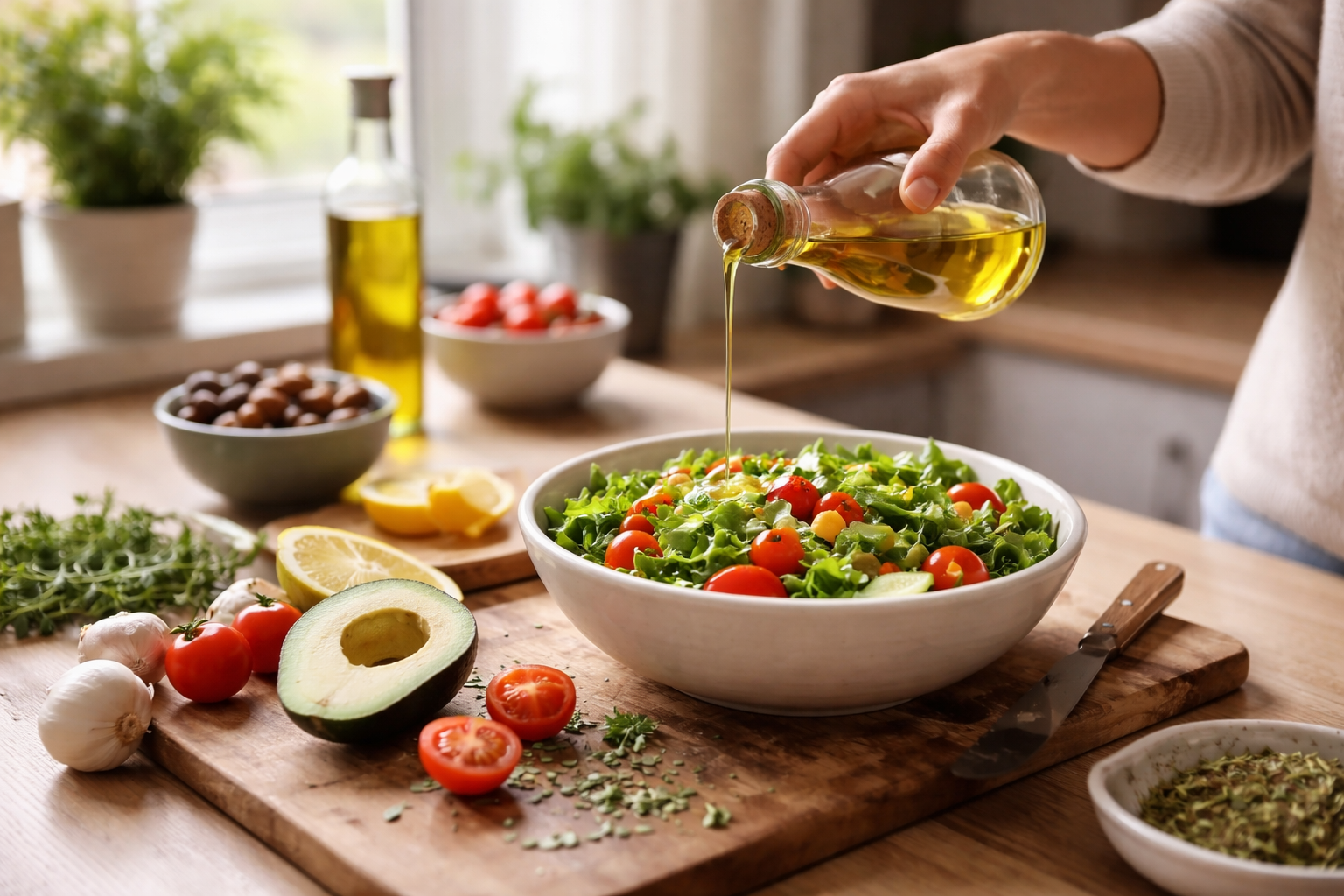
- Adding it to salads instead of high-sodium bottled dressings
- Pairing it with whole foods like vegetables, grains, and lean proteins
What people often notice is that meals feel more satisfying without needing extra salt or processed ingredients. This can naturally align with kidney-conscious eating habits.
Factors That Influence Its Impact on Kidney Health
While olive oil is generally considered a healthier fat, its role depends on the broader context of a person’s diet and lifestyle.
1. Overall Diet Pattern
Olive oil tends to be most beneficial when it replaces less healthy fats—not when it is simply added on top of an already high-fat diet.
2. Portion Awareness
Like all fats, olive oil is calorie-dense. Small amounts can go a long way. People who are mindful of energy intake often use it in moderation.
3. Food Pairings
Its benefits are often discussed in combination with whole, minimally processed foods. For example, pairing olive oil with vegetables may support better overall nutrient intake.
4. Type of Olive Oil
Extra virgin olive oil is less processed and retains more natural compounds compared to refined versions. This is why it is commonly mentioned in health discussions.
These factors help explain why olive oil is part of a broader dietary approach rather than a standalone solution.
What People With Kidney Concerns Often Notice
People who begin incorporating olive oil into a more balanced eating pattern often report subtle, gradual changes rather than immediate effects.
Some commonly mentioned experiences include:
- Meals feel more flavorful without relying heavily on salt
- Improved consistency in following a structured diet
- Greater satisfaction from meals, reducing the urge for processed snacks
It’s important to note that these are general observations tied to overall dietary changes—not direct effects of olive oil alone.
Kidney health itself is not something most people can “feel” improving day to day. Instead, awareness often comes from routine checkups and lab results.
How Olive Oil Connects to Other Kidney-Friendly Foods
Olive oil is rarely discussed in isolation. It often appears alongside other dietary patterns that support general health.
For example, it is commonly associated with:
- Vegetables and plant-based meals
- Whole grains in balanced portions
- Lean protein sources
- Low-sodium cooking approaches
This is why many people exploring kidney-conscious eating also look into broader topics like the Mediterranean-style diet for kidney health or anti-inflammatory foods for kidney support.
These approaches emphasize patterns rather than isolated ingredients, which can make them easier to follow over time.
Related Lifestyle Considerations
Diet is only one piece of the kidney health picture. Olive oil can play a role, but it works best when combined with other supportive habits.
People often explore:
- Staying aware of sodium intake
- Maintaining balanced blood pressure levels
- Keeping blood sugar within a healthy range
- Choosing whole foods more often than processed options
For those looking at the bigger picture, topics like ways to support kidney function naturally often include both dietary and lifestyle considerations.
When People Start Exploring Practical Changes
Interest in olive oil and kidney health often grows during moments of transition—such as after a routine checkup, a new diagnosis, or a general desire to improve long-term health.
At this stage, many people are not looking for drastic changes. Instead, they want simple, sustainable adjustments that fit into everyday life.
Switching cooking oils, adjusting meal preparation methods, and learning how to flavor food without excess sodium are common starting points.
Over time, these small changes can help create a more consistent and manageable way of eating.
Frequently Asked Questions
Is olive oil safe for people with chronic kidney disease?
Olive oil is generally considered compatible with many kidney-conscious diets because it is low in sodium and potassium. However, individual dietary needs can vary, so people often adjust based on their overall eating plan.
How much olive oil is typically used in a kidney-friendly diet?
There is no single amount that applies to everyone. Olive oil is usually used in moderation as part of balanced meals rather than in large quantities.
Is extra virgin olive oil better than regular olive oil?
Extra virgin olive oil is less processed and contains more natural compounds. This is why it is often preferred in discussions about healthy eating patterns.
Can olive oil improve kidney function?
Olive oil is not a treatment or cure. It is better understood as part of an overall dietary pattern that supports general health, which may indirectly benefit kidney function.
What foods pair well with olive oil in a kidney-conscious diet?
It is commonly used with vegetables, grains, and lean proteins. Some people explore broader meal ideas through approaches like Mediterranean-style eating or structured guides that bring these elements together.
Closing Thoughts
Olive oil and kidney health are often discussed together because olive oil fits naturally into balanced, heart-conscious eating patterns. It offers a practical way to replace less healthy fats while supporting meals that are flavorful and satisfying.
Rather than focusing on a single ingredient, it helps to view olive oil as part of a bigger picture—one that includes whole foods, mindful choices, and consistent habits.
For those trying to connect all the pieces, exploring a more structured approach to kidney-friendly living can sometimes make the process feel clearer and more manageable.

Robin Abbott is a wellness and lifestyle writer at Healthusias, focusing on everyday health awareness, habits, and life optimization through clear, non-medical explanations.