Passive Spinal Flexion Relieves Anxiety-Related Back Tension Fast
If you’re like me, you might’ve spent hours hunched over a screen, curled up on the couch, or stuck in traffic, unaware that your spine is quietly absorbing it all. I used to think stretching and a few deep breaths could undo the stress from daily life — until I discovered something that flipped everything: passive spinal flexion for anxiety-related tension. At first, it sounded like yoga-jargon or another trendy body hack. But once I actually tried it, I realized it’s a game-changer — especially for those of us dealing with the double punch of mental stress and physical tightness.
Understanding Passive Spinal Flexion

Let’s break this down. Passive spinal flexion involves gently rounding the spine in a supported, gravity-assisted way without active muscular effort. It’s not about forcing your back into a C-shape or folding over in pain — far from it. It’s more like letting your spine melt into a curve, usually while lying down or draping over a bolster, couch, or even your bed. You don’t “do” much. You let it happen. And that’s where the magic lies, especially for anxiety-induced muscular tension.
Here’s the kicker: most of us store stress in our spine. It’s not just psychological — it’s neuromuscular. The spine, especially the thoracic and lumbar regions, absorbs emotional overwhelm. Passive flexion tells your nervous system, “Hey, it’s okay to let go now.”
My First Experience: Nothing Fancy, Just Relief
I had one of those days — back-to-back meetings, a deadline breathing down my neck, and zero mental bandwidth left. Instead of collapsing on the couch like usual, I laid on the floor with a folded blanket under my lower back and let my body round forward naturally. No timer. No expectations. Within minutes, I felt like someone had unplugged a pressure valve behind my ribs.
That single moment — quiet, oddly emotional — got me hooked. Not just because of the physical release, but because for the first time in weeks, my mind wasn’t racing. Passive spinal flexion gave me a backdoor into my own nervous system.
Why It Works: The Science Meets the Soul
- Stimulates the parasympathetic nervous system: This “rest and digest” state is the antidote to chronic fight-or-flight.
- Releases fascia: Especially the thick thoracolumbar fascia that often clamps down during stress.
- Improves interoception: Your ability to sense what’s going on inside your body, which is often hijacked by anxiety.
According to PubMed, supported flexion positions can downregulate sympathetic arousal and reduce cortisol — our stress hormone. It’s also why this practice is being integrated into trauma-sensitive yoga and somatic therapy.
If you’re dealing with spinal tension caused by emotional stress or anxiety, you’re not alone. Many people misread these signals as just “tight back muscles” when in fact, they’re part of a bigger cycle involving breath holding, poor posture, and nervous system dysregulation. That’s why practices like somatic therapy are gaining popularity.
How to Practice It Safely and Effectively

Setup Suggestions
- Use a firm pillow or rolled blanket beneath your lower back or mid-spine.
- Lying on your back, let your knees fall gently to the chest or feet flat on the floor.
- Try a supported child’s pose with a bolster underneath your torso.
Don’t overthink it. If it feels like your spine is softening, you’re doing it right. Avoid anything that feels pinchy or sharp — this isn’t about deep stretching.
Best Times to Try It
- Right after work, before diving into dinner or scrolling.
- First thing in the morning to reset your nervous system.
- During a panic spike or mental crash — yes, even mid-day.
Pro tip: Pair it with soft breathing through your nose, maybe even with your eyes closed. You’ll be surprised how quickly your system downshifts. It’s also one of the few spine techniques I recommend doing in bed if you’re struggling with nighttime back tension or waking up sore.
When Spinal Flexion Might Not Be Ideal
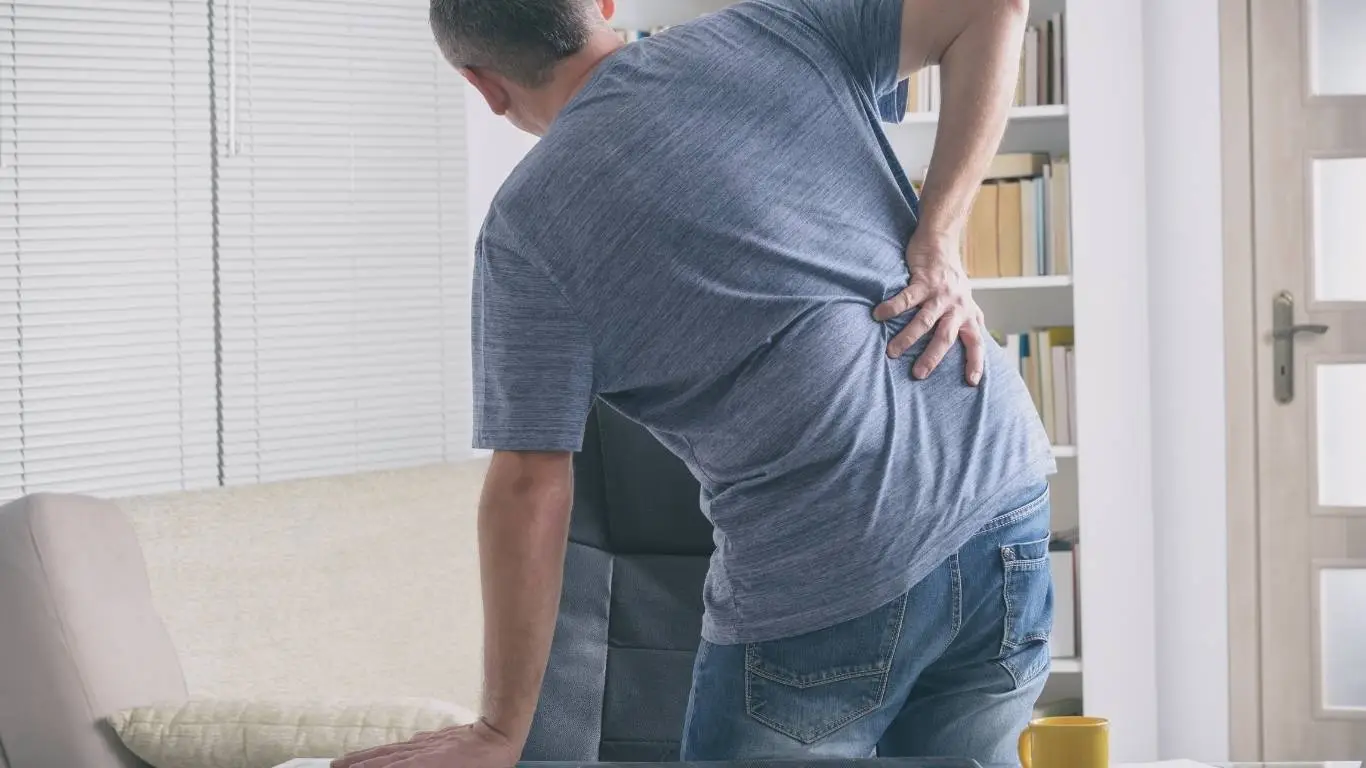
There are times you’ll want to skip this — like in acute disc herniation, recent surgery, or cases of lumbar radiculopathy with sharp pain. If you’re unsure, get the green light from a spine-informed physical therapist.
Still, for most of us navigating high-functioning anxiety or chronic tension, passive spinal flexion can be a gentle daily reset. I’d even argue it’s less about “stretching” and more about giving your spine permission to stop holding your life together for a few minutes.
Other Practices That Pair Well With It

If you want to dive deeper into how movement and posture shape spinal health, explore our guide on exercise and ergonomics for back pain. It pairs perfectly with the emotional and physical benefits passive flexion brings. For the full picture on back pain causes, mechanisms, and lifestyle integration, check out the broader context in our main back pain resource hub.
The Emotional Layers Hiding in Your Spine

There’s something profoundly humbling about realizing your spine is holding onto your emotional backlog. I remember lying in a supported flexion pose one night — low lighting, quiet room, just me and my breath — and out of nowhere, this subtle wave of sadness crept in. No drama. No tears. Just this undeniable sense that my body had been waiting for permission to exhale.
Turns out, passive spinal flexion doesn’t just decompress your vertebrae — it unlocks the emotional armor too. It’s no coincidence that trauma-sensitive yoga programs include these types of movements early in their sessions. According to psychologytoday.com, stress and trauma often live in the body long after the mind has moved on, and the spine — especially the thoracolumbar junction — is one of the main storage zones.
Incorporating this one simple practice daily became a quiet form of therapy for me. Not instead of professional help — but as a way to stay emotionally regulated in between life’s storms. It’s like giving my nervous system a place to rest.
Making Passive Spinal Flexion a Lifestyle Ritual

Creating Your Space
You don’t need a yoga studio or special props. Just a bit of floor, a folded blanket, or a pillow. Over time, I even started keeping a foam roller near my bed — not for rolling, but to drape over. I now think of it as part of my home’s emotional first-aid kit.
- Keep the space warm and inviting.
- Low lights or even natural lighting helps shift into parasympathetic mode.
- Add a subtle soundscape if silence makes you edgy — soft nature sounds or low instrumental music are great.
When It’s Needed Most
Once you build the habit, you’ll notice patterns. For me, I reach for this practice when:
- I’ve had a high-caffeine day and my muscles are jittery.
- I’m doom-scrolling or stuck in that frazzled overthinking loop.
- I can feel that familiar back-of-the-ribs tightness creeping in from stress.
It’s also incredibly useful during travel recovery. Flights, long drives, even just packing and lifting can spike sympathetic activity and tighten spinal tissues. Try a few minutes of gentle flexion the night after a trip — it’s an instant recalibration. If you’re on the road often, check out our guide on back pain management while traveling.
Pair It With Mindful Tools for Long-Term Results

What makes passive spinal flexion so powerful is how well it pairs with subtle, nervous system-friendly tools. It’s like giving your mind and body matching keys to the same locked door.
- Journaling: Try this after your practice — thoughts flow better when your body is relaxed.
- Guided imagery: Visualize tension leaving your spine as your body softens.
- Somatic tracking: Gently observe the physical sensations as they arise. It deepens body awareness and creates emotional resilience. Our piece on somatic tracking for spine pain has more depth on this.
You could also layer in techniques like breathwork or explore tools like pain tracking apps to better understand your patterns and triggers.
The Deeper Nervous System Reset

As someone who’s walked the fine line between burnout and resilience, I can say without fluff — this practice creates a gap between the external world and your internal reaction to it. That space is where healing begins.
With repeated use, you may even notice your baseline tension lowering. Your breath gets fuller. Your tolerance to stress improves. And perhaps most powerfully, your spine — this brilliant, often neglected structure — starts feeling less like a container for pain and more like the channel for strength, intuition, and calm.
If you’re curious to explore how emotional and neurological health interact with chronic pain, don’t miss our insights on mental and emotional dimensions of back pain. It’s a side of spinal health that rarely gets the spotlight but is critical for whole-person healing. You’ll also find more grounding practices and deeper support in the main back pain guide, tailored for those ready to go beyond surface-level relief.

Camellia Wulansari is a dedicated Medical Assistant at a local clinic and a passionate health writer at Healthusias.com. With years of hands-on experience in patient care and a deep interest in preventive medicine, she bridges the gap between clinical knowledge and accessible health information. Camellia specializes in writing about digestive health, chronic conditions like GERD and hypertension, respiratory issues, and autoimmune diseases, aiming to empower readers with practical, easy-to-understand insights. When she’s not assisting patients or writing, you’ll find her enjoying quiet mornings with coffee and a medical journal in hand—or jamming to her favorite metal band, Lamb of God.